

Aesthetic medicine
Hyaluronic acid fillers
Restoring lost volume and subtly defining facial contours — gradually, in small amounts, so the result stays in harmony with your features.
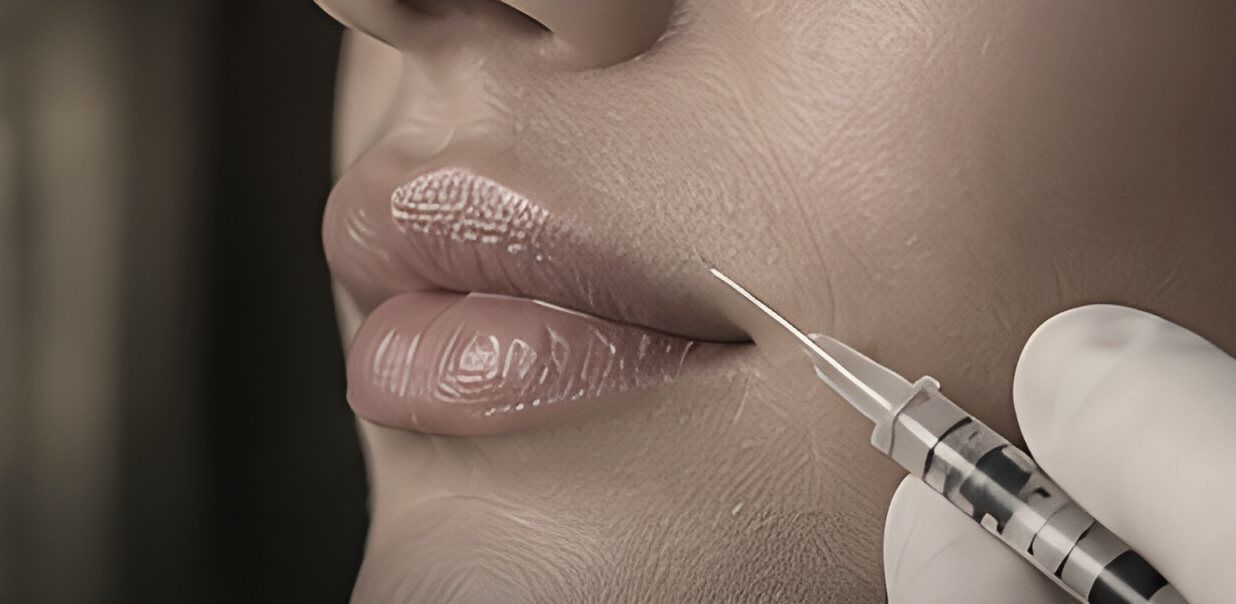
- STYLAGEHyaluronic acid fillers
- 1 mlBilling unit
- HyaluronidaseAvailable at the clinic
- GradualSmall amounts, natural result
What are hyaluronic acid fillers?
With age, the skin, the subcutaneous tissue and the supporting structures of the face gradually change, which can alter the volume, contours and proportions of individual areas. Hyaluronic acid occurs naturally in the skin and connective tissue, where it binds water.
Hyaluronic acid fillers are used for targeted correction of volume and contours, depending on each patient’s anatomy and individual needs. A filler is a hyaluronic acid gel injected with a fine needle or cannula into a precisely chosen tissue layer.
Unlike botulinum toxin, which relaxes a muscle, a filler does not change movement — it adds volume. This is why the two treatments often complement each other. Hyaluronic acid breaks down naturally over time, so the effect is temporary; and if needed, the filler can be dissolved with the enzyme hyaluronidase.
Who it is for
Who are fillers for?
At our clinic we use hyaluronic acid fillers for people who want to:
- restore lost facial volume
- give the lips more volume, definition or symmetry
- enhance the cheekbones
- define the jawline
- refresh their appearance without surgery, with a natural result
A detailed medical history is taken and facial proportions are assessed before treatment. Which area is appropriate and how much product is needed is decided by the doctor after an examination — sometimes the advice is precisely not to treat, or to do less.
In our surgery
What we use at Swiss Dental
We use STYLAGE hyaluronic acid fillers, and hyaluronidase — the enzyme that can dissolve filler when needed — is available at the clinic.
STYLAGE is a range of hyaluronic acid fillers. The range includes gels of different density for different areas and depths — for example the lips or volume restoration. For each area, a gel is chosen whose properties suit the tissue and the desired effect.
The amount needed depends on the area and the desired effect; the lips often need a smaller amount, while restoring volume across several areas is planned gradually, over several visits.
Hyaluronidase is an enzyme that breaks down hyaluronic acid. It is used when filler needs to be corrected or removed — for example because of irregularities, excess product or a complication. Having it available at the clinic is an important part of working safely with hyaluronic acid fillers.
Treatments are performed by Dr. med. dent. Antonia Lokin Ivankić, who has completed the basic and advanced hyaluronic acid filler training modules at the AMSTA Academy. As a doctor of dental medicine, she has professional training in the anatomy of the orofacial region.
- Product
- STYLAGE — hyaluronic acid
- Billing unit
- 1 ml
- Correction / dissolving
- Hyaluronidase
- Areas
- Lips, cheekbones, jawline, facial volume
Less is more
We work gradually, in small amounts, with a review and the option to top up.
Facial proportions
The plan is based on the relationship between lips, teeth, cheekbones and jawline.
Can be dissolved
Hyaluronidase allows the filler to be dissolved when necessary.
Treatment areas
Each area has its own anatomy and its own goal. The plan is always made for the face as a whole, not for one area in isolation.
Safety, contraindications and medical history
A hyaluronic acid filler is a medical product injected into tissue, so every treatment is approached as a medical procedure. The treatment is not given, is postponed, or needs extra caution and individual assessment with:
- pregnancy and breastfeeding
- active infection, inflammation or cold sores at the treatment site
- known hypersensitivity to hyaluronic acid or the product’s ingredients (e.g. local anaesthetic)
- certain autoimmune conditions or acute illness — assessed individually
- anticoagulant or antiplatelet therapy — please be sure to tell us, and do not stop taking it on your own
- recent dental or aesthetic procedures in the same area, as assessed
A rare but serious complication of fillers is blockage of a blood vessel. Knowledge of anatomy, careful technique and having hyaluronidase available at the clinic are therefore essential. If severe or unusual pain, sudden blanching or discolouration of the skin — and especially any visual disturbance — occurs after treatment, seek emergency medical help immediately and contact the clinic at the same time.
Procedure
What does the treatment involve?
Consultation and medical history
We talk about your wishes, health, medication and previous treatments and assess your facial proportions.
Plan
We decide on the area, amount and technique and explain the expected result and possible reactions.
Preparation
The skin is thoroughly cleansed and disinfected; local anaesthesia is applied if needed.
Injecting the filler
The filler is injected gradually with a needle or cannula, checking shape and symmetry throughout.
Aftercare and review
You receive instructions for the following days; the result is reviewed once the swelling has settled.
Benefits
Benefits of hyaluronic acid fillers
Immediate effect
The change is visible straight away, with the final shape once swelling settles.
No surgery
Treatment uses a needle or cannula, with no incisions.
Gradual approach
The result is built step by step, with the option to top up.
Can be dissolved
The filler can be dissolved with hyaluronidase if needed.
Naturally present in the skin
Hyaluronic acid breaks down naturally over time.
Realistic expectations
- The effect is temporary and needs renewing to be maintained.
- Filler does not replace surgery or tighten loose skin.
- Swelling and bruising can affect your appearance for a few days.
Duration and recovery
Duration and recovery
- Treatment time
- Usually 30–60 minutes, including preparation
- Swelling
- Expected, usually a few days
- Final shape
- Once the swelling has settled
- Duration of effect
- Usually several months to about a year
- Back to daily life
- Mostly straight away
Temporary reactions are expected after treatment: swelling, redness, tenderness and possible bruising at the injection site. Swelling of the lips is often more pronounced in the first days. Small irregularities may be felt and usually disappear as the tissue settles.
For the first days we usually advise avoiding strenuous exercise, saunas, sunbeds and extreme heat or cold, not massaging the area unless the doctor recommends it, and avoiding alcohol.
The duration of the effect and of recovery is individual and depends on the area, amount, product and metabolism.
Results and maintenance
Results and maintenance
The aim is a result that looks like you, just more rested — without overdoing it. The final shape is assessed once swelling has settled, when a small top-up is possible if needed.
Hyaluronic acid breaks down gradually, so volume decreases over time. Treatment is renewed as agreed, often with a smaller amount than the first time.
Looking after your result
- Follow the instructions for the first days after treatment
- Attend the review once swelling has settled
- Sun protection and regular skincare
- Renew treatment at the intervals your doctor recommends
Frequently asked questions
Frequently asked questions
Can’t find your answer? Call us or send an enquiry.
+385 99 268 6537Which filler do you use?
We use STYLAGE fillers — a range of hyaluronic acid gels of different density, so a suitable gel is chosen for each area.
How long does a hyaluronic acid filler last?
Usually from several months to about a year. How long the effect lasts depends on the treatment area, the amount, the product and your individual response.
Will the result look natural?
We work gradually and in small amounts, constantly assessing facial proportions. The aim is to enhance your features, not change them. The result can be topped up at the review if needed.
Does the treatment hurt?
Most patients describe it as tolerable. Local anaesthesia is used if needed, and many fillers also contain a local anaesthetic. The lips are more sensitive than other areas.
Can filler be removed?
Yes. Hyaluronic acid filler can be dissolved with the enzyme hyaluronidase, which is available at our clinic. It is used for irregularities, excess product or complications.
What are the possible side effects?
The most common are temporary swelling, redness, tenderness and bruising. Rarely, lumps or inflammation can occur. A rare but serious complication is blockage of a blood vessel — which is why knowledge of anatomy, careful technique and access to hyaluronidase matter.
What is the difference between fillers and botulinum toxin?
Botulinum toxin relaxes a muscle and softens expression lines; a filler restores volume and shapes contours. They work differently and often complement each other.
Can I be treated if I get cold sores?
During an active cold sore or other infection at the treatment site, treatment is postponed. If you get cold sores often, tell us at the consultation — it is an important part of your medical history.
Related
Related treatments
Botulinum toxin
Targeted relaxation of the facial muscles for softer lines and a rested expression — in small, precise doses that keep your natural expressions intact.
SkinPen microneedling
Microneedling with the SkinPen® device uses controlled micro-injuries to stimulate the skin’s natural renewal — for example in acne scarring and uneven texture.