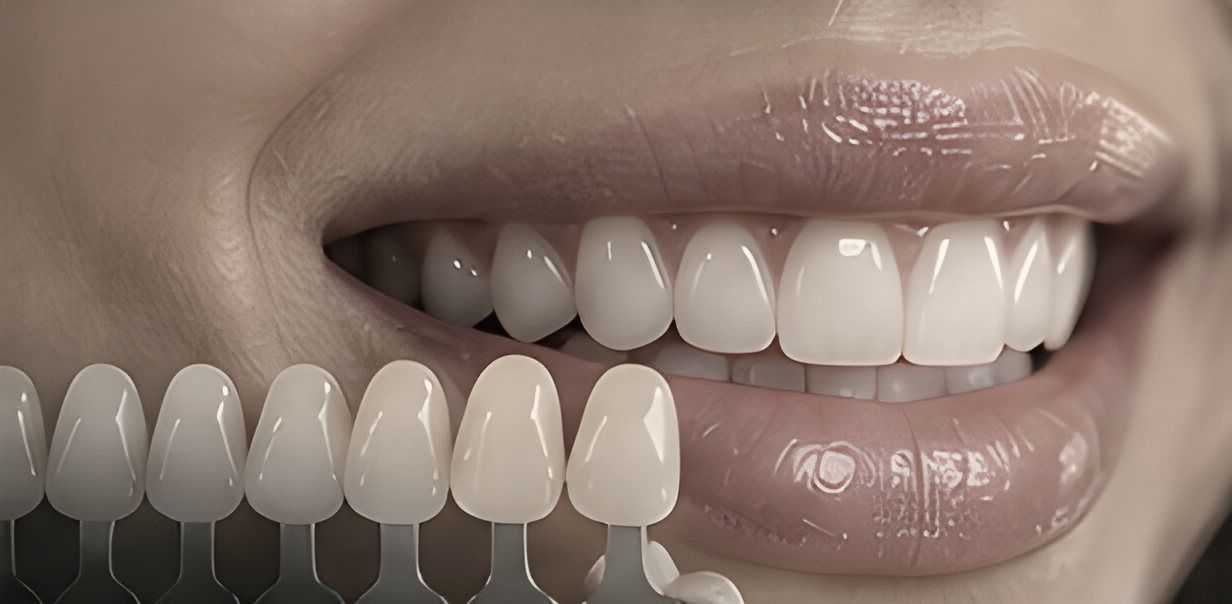

Cosmetic dentistry
Porcelain veneers
Thin ceramic veneers that change the shape, colour and proportions of your front teeth — made to measure for your smile, preserving as much of your own tooth as possible.
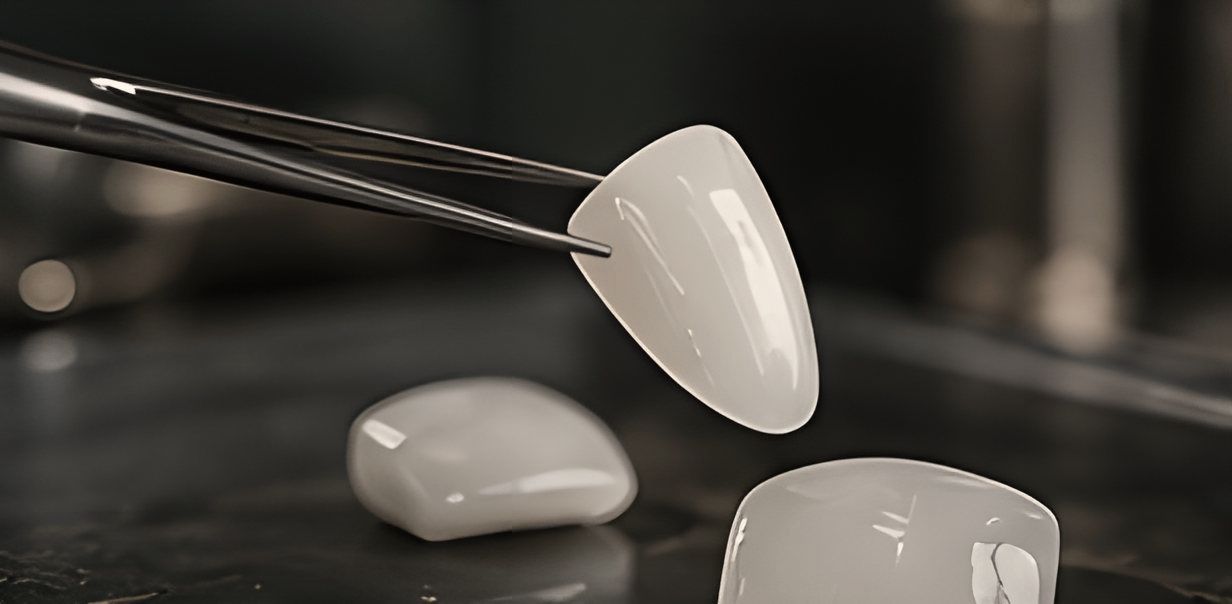
- Porcelain veneersIPS e.max or refractory technique
- MinimalEnamel preparation, depending on the case
- Made to measureShape and shade matched to your face
What are porcelain veneers?
Veneers are thin ceramic shells bonded to the front, visible surface of a tooth. Unlike a crown, which covers the whole tooth, a veneer covers only the front, so it usually requires removing much less tooth structure.
Veneers can change the colour, shape, length and alignment of front teeth. Ceramic is dense and smooth, reflects light much like enamel, and holds its colour over time better than composite materials.
Veneers are attached with an adhesive technique — a special cement that bonds them firmly to the tooth. Because this is a long-term cosmetic treatment that often involves irreversible tooth preparation, the decision is made after a detailed smile analysis and a conversation about your expectations.
Who it is for
Who are veneers for?
Veneers can be a good solution when you want to change the look of your front teeth, for example with:
- discolouration that whitening cannot adequately remove
- small gaps between teeth (diastema)
- chipped, worn or short teeth
- irregularly shaped or sized teeth
- mild misalignment, when orthodontic treatment is not wanted or needed
Veneers are not suitable for everyone. After an examination, the dentist assesses the health of your teeth and gums, your bite, the amount of enamel and habits such as clenching. Sometimes whitening, orthodontics or a crown is the better solution.
IPS e.max or refractory veneer?
Both types are ceramic and made to measure in the laboratory. They differ in how they are made and in when we recommend them.
We make a recommendation after analysing your smile, tooth colour and shape, and your bite.
Procedure
What does the procedure involve?
Veneers usually take several appointments, with most of the time devoted to planning.
Examination and smile analysis
We check the health of your teeth and gums, your bite and shade, and discuss what you would like to change.
Shape and shade plan
We decide on the number of veneers, type of ceramic, shape and shade in harmony with your face and lips.
Tooth preparation
If needed, a thin layer of enamel is removed — only as much as the plan requires.
Impression
The impression goes to the dental laboratory, where each veneer is made individually.
Try-in and bonding
We check fit, shape and shade, then bond the veneers to the teeth adhesively.
Check-up
Bite, margins and gums are checked and you receive care instructions.
Benefits
Benefits of porcelain veneers
Natural appearance
Ceramic mimics the translucency and lustre of enamel.
Lasting colour
Ceramic holds its colour better than composite over the long term.
Less preparation than a crown
Only the front surface of the tooth is covered.
Shape and colour in one
Colour, shape and proportions can be corrected together.
Well tolerated
Smooth ceramic is well tolerated by the gums.
Important to know
- If enamel is prepared, the change is irreversible — the tooth will always need to be covered.
- Veneers cannot be whitened, so the shade must be chosen carefully.
- Heavy clenching or grinding requires a protective night guard, and sometimes veneers are not advisable.
- Ceramic can chip when biting very hard objects.
Duration and recovery
Duration and recovery
- Number of appointments
- Usually several
- Anaesthesia
- Local, when needed
- Sensitivity after bonding
- Possible, usually temporary
- Back to daily life
- Straight after the appointment
After bonding, teeth may be more sensitive to hot and cold for a short time, and your bite may feel different until you get used to it. Anything that feels high when biting is adjusted at the check-up.
There is no recovery period as such — normal activities are possible straight after the appointment.
The number of appointments and production time depend on the number of veneers, the type of ceramic and the individual case.
Results and maintenance
Results and maintenance
The result is front teeth with harmonious shape and colour that look like part of your face rather than an addition to it. Ceramic does not change colour the way natural teeth do, so the result is stable.
Veneers are cared for like your own teeth. The tooth beneath can still decay at the margins and the gums can become inflamed if not cleaned well — so hygiene and check-ups remain important.
Caring for veneers
- Brushing twice a day with a soft brush and a non-abrasive toothpaste
- Daily cleaning between the teeth
- Avoiding biting nails, pens and very hard food with the front teeth
- A night guard if you clench or grind your teeth
- Regular check-ups and professional cleaning
Frequently asked questions
Frequently asked questions
Can’t find your answer? Call us or send an enquiry.
+385 99 268 6537Do teeth need to be ground down for veneers?
It depends on the case. Usually a thin layer of enamel is removed so the veneer has room and a natural profile. The extent of preparation is set in the plan and adapted to what you want to achieve.
How long do porcelain veneers last?
With good hygiene, protection from excessive forces and regular check-ups, porcelain veneers can last for many years. Their lifespan cannot be guaranteed; it depends on your bite, habits and maintenance.
Does getting veneers hurt?
Tooth preparation, when needed, is done under local anaesthesia. After bonding, brief sensitivity to hot and cold is possible.
Can I whiten my teeth before veneers?
Yes, and this is often recommended when only some teeth receive veneers. The veneers are made to match the whitened shade, so they stay in harmony with your other teeth.
Can veneers change colour?
Ceramic keeps its colour in the long term. Staining can build up at the edge of a veneer over time, and this is removed with professional cleaning.
Can I have veneers if I clench my teeth?
Sometimes, with a protective night guard. With pronounced bruxism veneers can be risky, so the dentist assesses whether they are an appropriate solution.
Related