

Implantology
Dental implants
A long-lasting replacement for a missing tooth, anchored in your own bone — carefully planned and made to look and function as close to a natural tooth as possible.
- NeodentImplant system
- 3D CBCTScanning and planning in-house
- 1 tooth → full archFrom a single tooth to a fixed bridge
What is a dental implant?
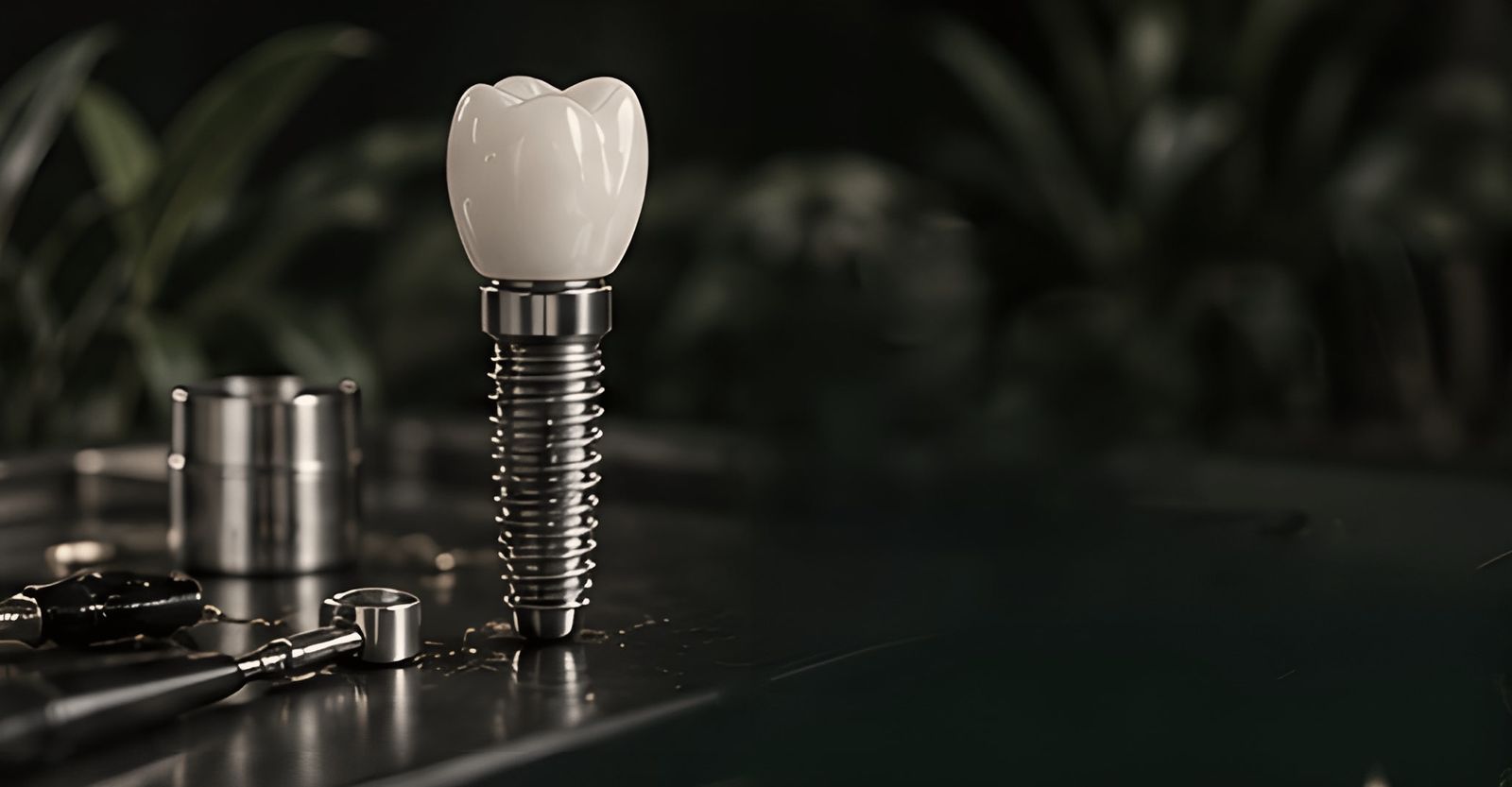
A dental implant is a small screw placed in the jawbone in place of a missing tooth. As it heals, the bone bonds firmly with the implant surface — a process called osseointegration. Once the implant is stable, an abutment is attached to it, and a crown, bridge or denture is fixed on top.
A tooth replacement on an implant consists of the implant, the abutment and the crown: the implant sits in the bone, the abutment rises above the gum and the crown is the visible part of the tooth. Unlike a conventional bridge, the neighbouring teeth do not need to be prepared. Crowns and bridges on implants are fixed and are not taken out, whereas a denture attached to implants is more stable than a conventional one but is taken out for cleaning.
Because an implant loads the bone in a similar way to a natural root, it helps preserve bone volume where the tooth is missing. This is why implant treatment is considered one of the most complete ways of replacing lost teeth — provided it is well planned and the patient is a suitable candidate.
Who it is for
Who are dental implants for?
Implants can be a solution in many situations, from one missing tooth to a full arch. We most often recommend them when:
- a single tooth is missing and you would rather not have healthy neighbouring teeth prepared for a bridge
- several teeth in a row are missing and a fixed implant bridge is needed
- a partial or full denture does not feel stable enough
- a tooth cannot be saved because of a fracture, decay or infection that can no longer be treated
- you want a fixed replacement — a crown or bridge — that you do not take out
Whether an implant is the right solution for you is decided by the dentist after a clinical examination and analysis of the diagnostic images, taking into account bone volume and quality, gum health, general health, medication and habits such as smoking.
In our surgery
Examination and planning
The implant position is decided before the procedure, with the bone and the future tooth in mind.
Where clinically indicated, CBCT imaging on our CS 8200 3D unit allows more detailed planning of the implant procedure. CBCT allows assessment of the amount and anatomy of the bone and of the planned implant’s relationship to the mandibular canal, the maxillary sinus and other important anatomical structures, so the position, length and diameter of the implant are decided before the procedure.
Planned in advance
The implant position is set with the bone, mandibular canal, maxillary sinus and future crown in mind.
Interim solution
If needed, a temporary crown on the implant until the final crown is made.
When bone is lacking
In the upper jaw, room for an implant can be created with a closed sinus lift or an open sinus lift with bone graft.
What if there is not enough bone?
After a tooth is lost, the bone gradually recedes. In the back of the upper jaw, the maxillary sinus also tends to extend downwards into the space once occupied by the root, and the remaining bone height may not be enough to hold an implant securely.
A sinus lift gently raises the floor of the sinus to make room for the implant. A closed (crestal) sinus lift is performed through the same site where the implant is placed and suits cases where only a little height is missing. An open sinus lift with bone graft is used when more bone is needed; the healing period is then longer.
Whether a sinus lift is needed, and which type, is assessed after a clinical examination and diagnostic imaging. Where indicated, a CBCT scan can be taken at the first appointment — so you know the plan and approximate timeline from the start.
Procedure
What does the procedure involve?
Treatment takes several appointments, with a healing period between placement and the final crown.
Examination and 3D CBCT scan
Clinical examination, medical history and, where indicated, a CBCT scan — possible on the same visit. We discuss your expectations and the options.
Treatment plan
You receive a written plan: number and position of implants, any additional procedures, type of restoration, timeline and costs.
Implant placement
Performed under local anaesthesia. The implant is placed in the planned position and the gum is closed.
Healing (osseointegration)
The bone bonds with the implant. Depending on the case, you may wear an interim restoration during this time.
Abutment and impression
An abutment is attached to the stable implant and an impression is taken for the crown or bridge.
Final crown and check-ups
The final restoration is fitted, the bite is checked and you receive care instructions. Regular check-ups follow.
Benefits
Benefits of dental implants
Neighbouring teeth preserved
Unlike a conventional bridge, healthy adjacent teeth do not need to be prepared.
Stable chewing
A crown or bridge on an implant is firmly fixed and does not move; an implant-retained denture holds far better than a conventional one.
Bone preservation
The implant transfers load to the bone and helps slow down bone loss.
Natural appearance
The crown is shaped and shaded to match your own teeth.
Long-term solution
With good hygiene and regular check-ups, implants can last for many years.
Wide range of uses
From a single tooth to a fixed restoration on a full arch.
Worth knowing
- Treatment takes several months because the bone needs time to heal.
- Smoking, uncontrolled diabetes and poor oral hygiene increase the risk of complications.
- An implant cannot decay, but the tissue around it can become inflamed (peri-implantitis) if it is not cared for.
Duration and recovery
Duration and recovery
- Placing one implant
- Usually about an hour
- Anaesthesia
- Local
- Discomfort afterwards
- Usually a few days, managed with painkillers
- Healing before the crown
- Usually several months
- Back to daily activities
- Most patients the next day
Mild swelling and tenderness at the implant site are possible and usually settle within a few days. For the first days we recommend softer food, avoiding chewing on that side, and avoiding smoking and strenuous exercise.
The healing period before the final crown depends on bone quality, the implant site and whether a sinus lift or bone graft was performed. After an open sinus lift, healing takes longer.
Treatment and recovery times depend on the individual case. You receive a timeline after the examination and any necessary diagnostics.
Results and maintenance
Results and maintenance
The final crown is made to blend in with your teeth in shape, colour and position. When chewing and speaking, an implant behaves much like a natural tooth.
How long an implant lasts depends above all on how it is cared for. Plaque builds up on an implant just as it does on a tooth, and inflammation around the implant can lead to bone loss over time. Home care and regular check-ups are therefore an essential part of treatment.
Caring for your implant
- Brushing twice a day and cleaning between teeth with interdental brushes or floss
- Regular check-ups and professional cleaning at the clinic
- Follow-up X-rays as recommended by your dentist
- Not smoking, or at least cutting down significantly
- A night guard if you clench or grind your teeth
Frequently asked questions
Frequently asked questions
Can’t find your answer? Call us or send an enquiry.
+385 99 268 6537Does implant placement hurt?
The procedure is done under local anaesthesia, so you should feel pressure and vibration rather than pain. Once the anaesthesia wears off, some discomfort and swelling for a few days is possible and is usually well controlled with ordinary painkillers.
How long does the whole implant treatment take?
From placement to the final crown usually takes several months, because the bone needs time to bond with the implant. If a sinus lift or bone graft is needed, it takes longer. Your exact timeline is part of your treatment plan.
Which implants do you use?
We place Neodent implants, made of titanium. An abutment is then attached to the implant. We recommend keeping the details of your implant with your records.
Can I have an implant if I do not have enough bone?
Often, yes. In the upper jaw, missing bone height can be addressed with a closed sinus lift or an open sinus lift with bone graft. Whether an additional procedure is needed is assessed after an examination and diagnostic imaging.
Will I be without a tooth while the implant heals?
Depending on the site and situation, an interim solution is possible during healing — for example a temporary crown on the implant when conditions allow. We discuss the options when preparing your plan.
How long does a dental implant last?
With good oral hygiene, regular check-ups and a healthy lifestyle, implants can last for many years. Their lifespan cannot be guaranteed, however, because it depends on maintenance, general health, smoking and chewing forces.
Is there an age limit for implants?
Implants are placed only after jaw growth is complete. There is no upper age limit as such — general health, bone condition and the ability to maintain good hygiene matter more, and these are assessed at the examination.
Related
Related treatments
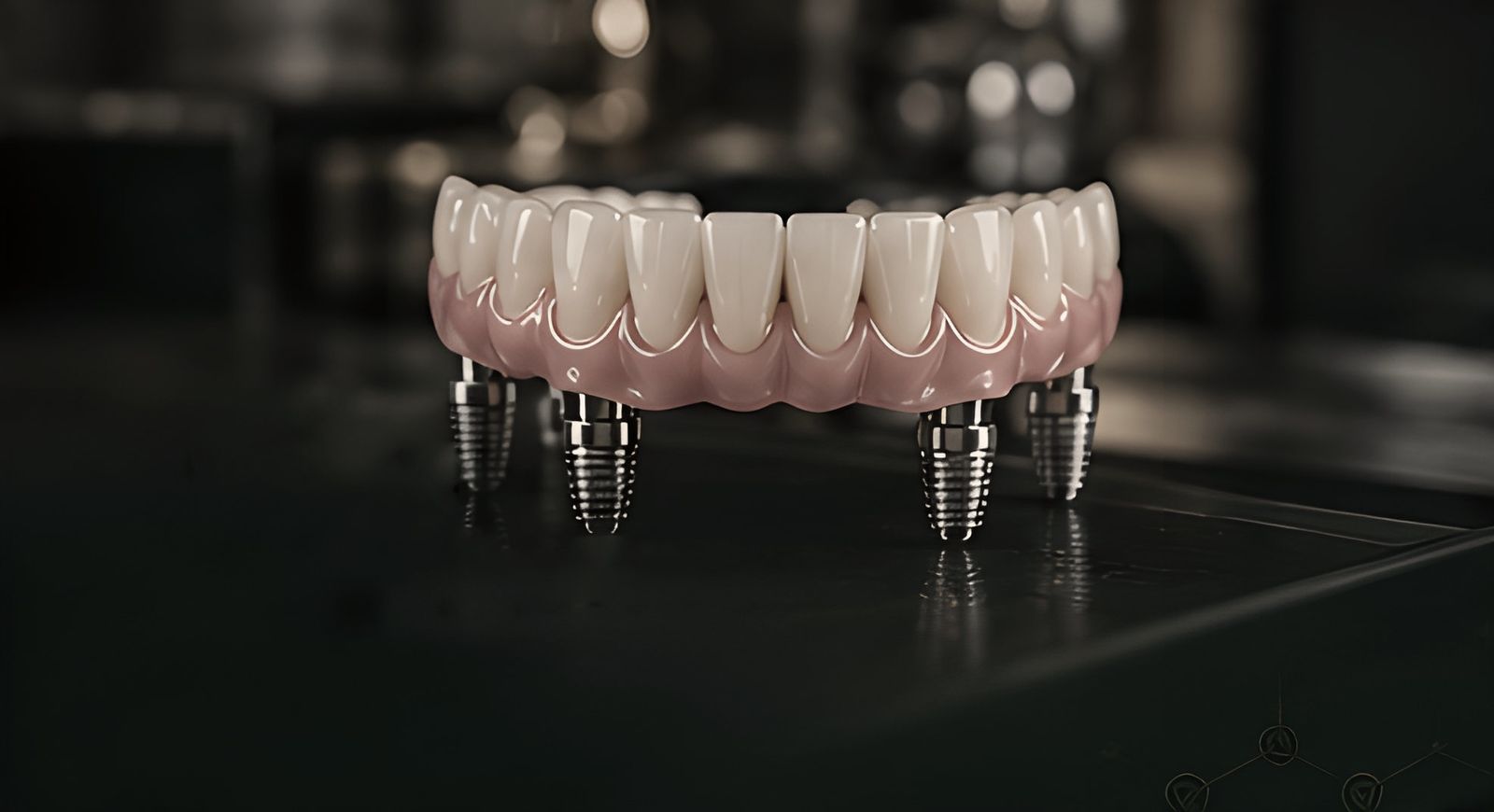
All-on-4
Fixed teeth for a full arch supported by four implants — for patients with no teeth, or with teeth that can no longer be saved.
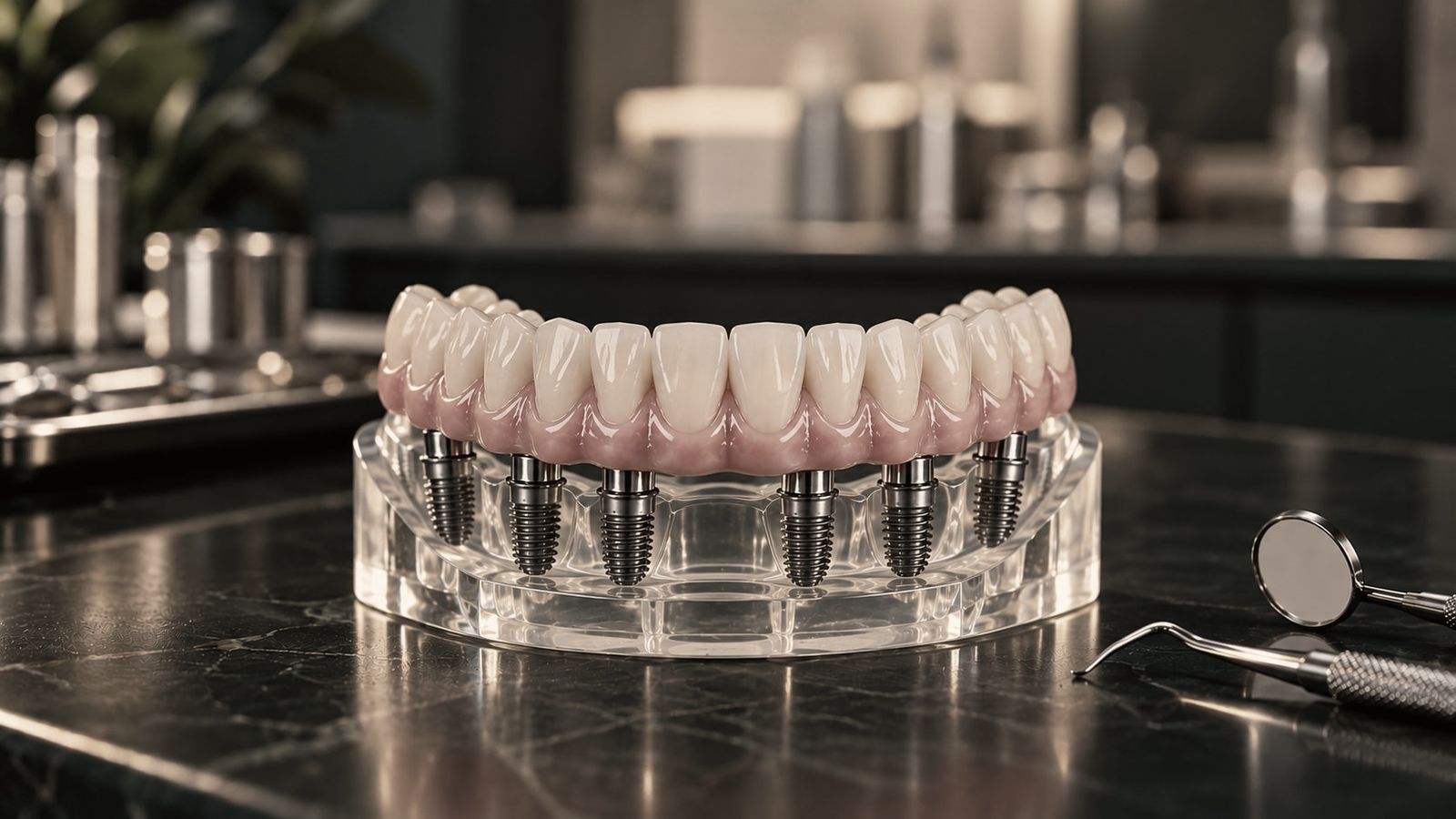
All-on-6
A fixed full-arch bridge supported by six implants spread along the jaw — one of the treatment options for a toothless jaw or teeth that can no longer be saved.
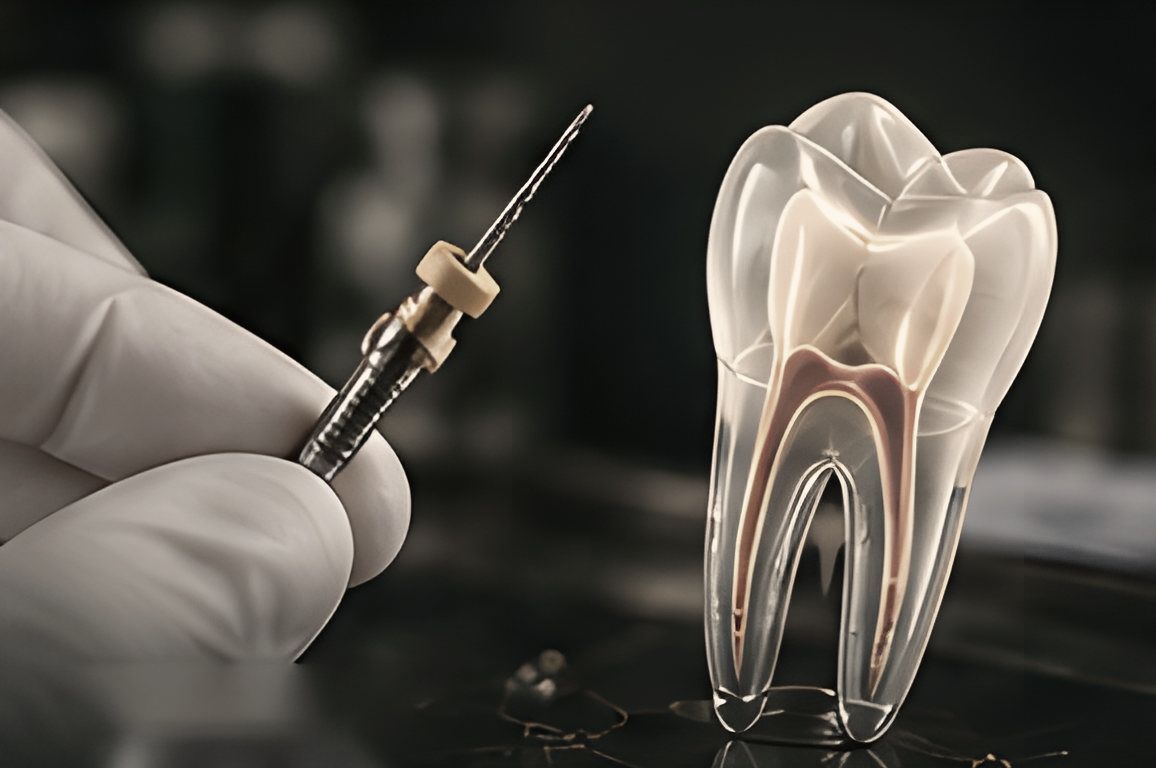
Root canal treatment
Treatment of the root canals that removes inflammation or infection from inside the tooth — so that your own tooth can stay in your mouth and keep working.