

Implantology · full arch
All-on-4
Fixed teeth for a full arch supported by four implants — for patients with no teeth, or with teeth that can no longer be saved.
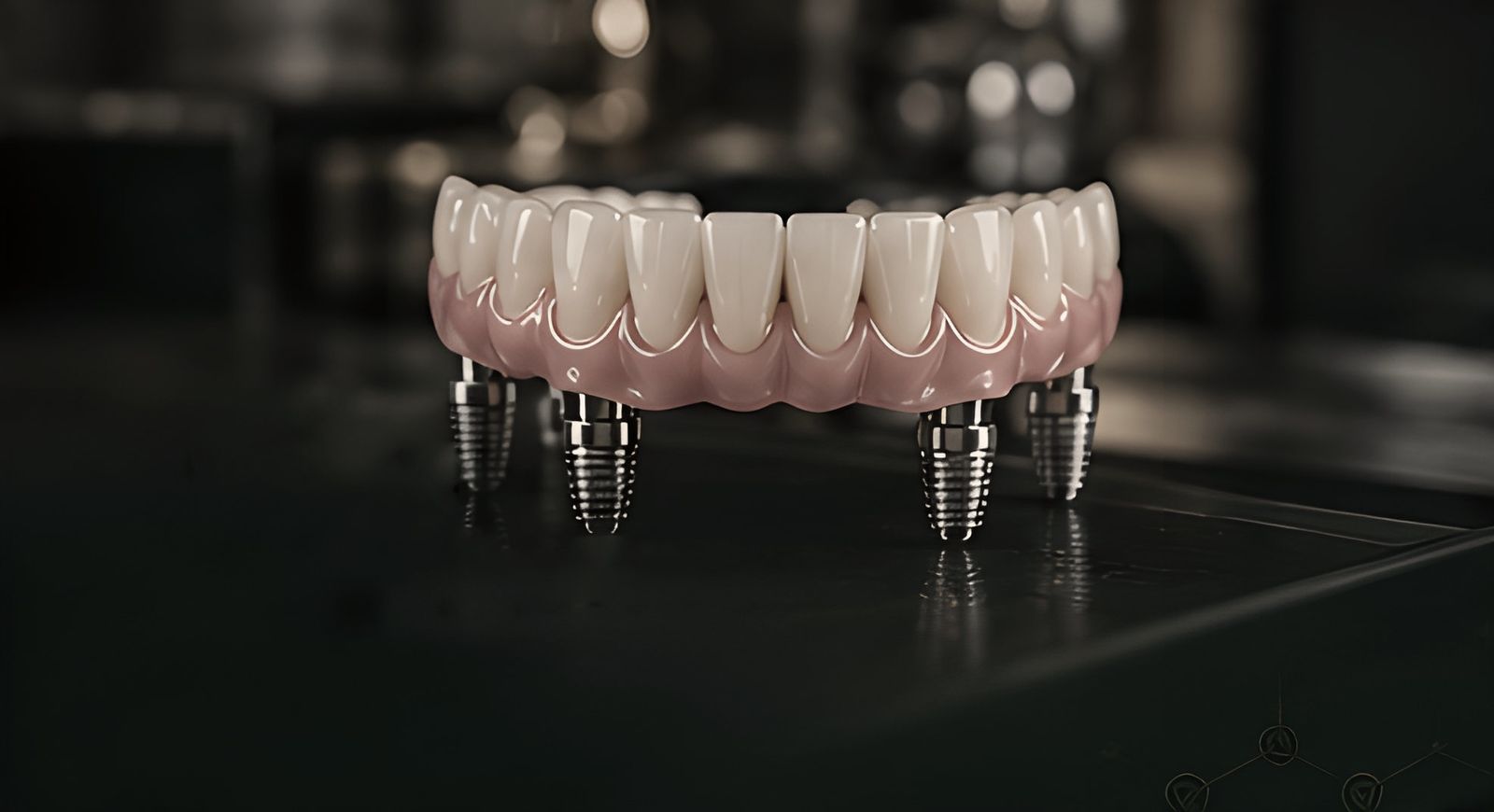
- 4Neodent implants per arch
- In the packageTemporary fixed bridge
- 3D CBCTPlanning when indicated
What is All-on-4?
All-on-4 is a concept in which a full arch of teeth — upper or lower — is replaced with a fixed bridge attached to four implants. The bridge is not removable: you clean it in your mouth like your own teeth, and only the dentist removes it at check-ups.
In the classic layout, two implants are placed at the front of the jaw and the two back implants are usually tilted. The angle lets the implants reach denser bone and avoid important anatomical structures, such as the maxillary sinus in the upper jaw or the mandibular canal in the lower jaw. This is why All-on-4 may sometimes be possible even when there is less bone at the back of the jaw.
Treatment takes place in two phases. First the implants are placed. When primary implant stability and clinical conditions allow, a temporary fixed bridge can be fitted for the healing phase. After a healing period, once the bone has bonded with the implants, the final restoration is made.
Who it is for
Who is All-on-4 for?
We most often consider All-on-4 for patients who:
- have no teeth in one or both jaws
- have remaining teeth that are lost or cannot be saved because of gum disease, decay or fractures
- wear a full denture that moves, rubs or makes chewing and speaking difficult
- would like a fixed solution instead of a removable denture
- have less bone at the back of the jaw, where other approaches would require more extensive bone grafting
All-on-4 is not suitable for everyone. The dentist decides after a clinical examination and analysis of the diagnostic images, assessing bone quantity and quality, the bite, general health and your ability to maintain hygiene. Sometimes All-on-6 or an implant-retained denture is the better solution.
In our surgery
What the treatment includes
All-on-4 treatment at our clinic includes four Neodent implants, four abutments and a temporary fixed bridge.
The temporary fixed bridge is included in the initial package. When primary implant stability and clinical conditions allow, it can be fitted for the healing phase; the timing and the interim solution are agreed in your individual treatment plan.
For the final restoration, which follows healing, there are two options: a composite / acrylic bridge or a zirconia-ceramic bridge. Where clinically indicated, CBCT imaging on our CS 8200 3D unit allows more detailed planning of the implant procedure.
- Implants
- 4 × Neodent
- Interim restoration
- Temporary fixed bridge
- Final restoration
- Composite / acrylic or zirconia-ceramic
Planned in 3D
The position and angle of each implant are set in advance with the bone, maxillary sinus and mandibular canal in mind.
Temporary bridge in the package
A temporary fixed bridge is included in the initial package; it is fitted when implant stability and clinical conditions allow.
Choice of final bridge
After healing you choose between composite / acrylic and zirconia-ceramic, guided by your dentist.
What is the difference between All-on-4 and All-on-6?
Both concepts share the same goal — fixed teeth on a full arch supported by implants. They differ in the number of implants and in how the load is distributed across the bone. Neither is universally "better": the choice depends on anatomy, bone quantity and quality, implant distribution, the bite and the individual treatment plan.
| — | All-on-4 | All-on-6 |
|---|---|---|
| Number of implants | 4 Neodent implants | 6 Neodent implants |
| Layout | Two front implants and two back implants, usually tilted to avoid the maxillary sinus or mandibular canal | Implants distributed along the whole arch |
| Bone required | Often possible even when there is less bone at the back of the jaw | Needs sufficient bone at more sites along the jaw |
| Load distribution | Load carried by four supports | More support points — load shared by six implants |
| Interim restoration | Temporary fixed bridge in the initial package (fitted when clinical conditions allow) | Temporary fixed bridge in the initial package (fitted when clinical conditions allow) |
| Final restoration | Composite / acrylic or zirconia-ceramic | Composite / acrylic or zirconia-ceramic |
The number of implants is decided by the dentist after a clinical examination and analysis of the diagnostic images, taking into account anatomy, bone quantity and quality, implant distribution, the bite and your individual treatment plan.
The final restoration: two options
Once healing is complete, the temporary bridge is replaced with the final restoration. There are two types, and the choice depends on your preferences, your bite and your dentist’s recommendation.
Both options are made to suit your face, lips and bite. Shape, colour and tooth position are checked before the final restoration is completed.
Procedure
What does All-on-4 treatment involve?
From the first examination to the final teeth, treatment follows several clearly defined stages.
Examination and diagnostics
Clinical examination, medical history, diagnostic imaging — including a 3D CBCT scan where indicated — and a conversation about your expectations.
Treatment plan
Choice of concept (All-on-4 or All-on-6), implant positions, any extractions and the type of final restoration.
Preparation and placement
Under local anaesthesia, teeth that cannot be saved are removed and four implants are placed.
Temporary fixed bridge
When primary implant stability and clinical conditions allow, the temporary fixed bridge is attached to the abutments; the timing is agreed in the treatment plan.
Healing
The bone bonds with the implants. Check-ups and a softer diet follow during this period.
Final bridge
Impressions, a try-in of shape and colour, and fitting of the final composite / acrylic or zirconia-ceramic bridge.
Benefits
Benefits of All-on-4
Fixed teeth
The bridge is attached to implants and is not taken out like a denture.
Fewer implants
A full arch is supported by four implants.
Less bone grafting
In some cases, tilted back implants reduce the need for extensive bone grafting.
No palate coverage
In the upper jaw the bridge does not cover the palate like a full denture, so taste and speech feel more natural.
More confident chewing
Stability allows a more varied diet than a removable denture.
Temporary bridge in the package
A temporary fixed bridge is included in the initial package; its timing is set in the treatment plan.
Realistic expectations
- Four implants carry the load of a full arch, so bone quality and precise planning are crucial.
- The bridge needs thorough daily cleaning, especially underneath and around the implants.
- A softer diet is needed during healing.
Duration and recovery
Duration and recovery
- Implant placement
- One longer appointment per arch
- Anaesthesia
- Local
- Swelling and discomfort
- Usually a few days to a week
- Softer diet
- Throughout the healing period
- Final restoration
- After healing — usually several months later
Because remaining teeth are often removed and four implants placed in the same procedure, swelling and discomfort may be more noticeable than after a single implant. They usually settle within a few days with cold compresses and the medication your dentist prescribes.
During healing, the temporary bridge should not be overloaded. We recommend softer food, avoiding hard and chewy foods, and attending regular check-ups.
The length of the procedure, recovery and time to the final restoration depend on the individual case and are set out in your treatment plan.
Results and maintenance
Results and maintenance
The final bridge is made to suit your face, lips and bite — the shape, colour and length of the teeth are checked before it is completed. The aim is a natural appearance and stable chewing.
Like natural teeth, implants and the bridge need daily care. Plaque under the bridge and around the implants can cause inflammation and bone loss, so correct hygiene and check-ups are the foundation of a long-lasting result.
Caring for All-on-4
- Brushing twice a day and cleaning under the bridge with special brushes or a water flosser
- Regular check-ups and professional cleaning, with removal of the bridge at the clinic when needed
- Follow-up X-rays as recommended by your dentist
- Not smoking
- A night guard if you clench or grind your teeth
Frequently asked questions
Frequently asked questions
Can’t find your answer? Call us or send an enquiry.
+385 99 268 6537Can I have fixed teeth right after the implants are placed?
This cannot be promised to everyone in advance. The initial package includes a temporary fixed bridge: when primary implant stability and clinical conditions allow, it can be fitted for the healing phase. Your individual plan is set after a clinical examination and analysis of the diagnostic images.
Is All-on-4 the same as a denture?
No. All-on-4 is a fixed bridge attached to implants that you do not remove at home. There are also removable implant-retained dentures (on 2 or 4 implants), which are taken out for cleaning — these are also available at our clinic.
What is the difference between All-on-4 and All-on-6?
They differ in the number of implants and how the load is distributed. All-on-4 uses four implants and is often possible with less bone at the back of the jaw; All-on-6 uses six implants spread along the arch. The choice depends on anatomy, bone, implant distribution, the bite and the individual plan.
Does the procedure hurt?
It is performed under local anaesthesia. Swelling and discomfort afterwards are expected and usually last a few days; they are managed with medication prescribed by your dentist.
Can I have All-on-4 if I have little bone?
This is often exactly why All-on-4 is chosen, as tilted back implants can avoid areas with less bone. The decision still depends on anatomy, bone quantity and quality and other factors, which are assessed after an examination and diagnostic imaging.
How long does All-on-4 last?
With good hygiene and regular check-ups, the implants and bridge can last for many years. Their lifespan cannot be guaranteed; it depends on maintenance, health, smoking and chewing forces. A composite / acrylic final bridge wears more over time than zirconia-ceramic.
How do I clean a bridge on implants?
You brush it in your mouth like natural teeth, and also clean underneath with interdental brushes, special floss or a water flosser. At check-ups the dentist removes the bridge when needed and cleans it thoroughly.
Related
Related treatments
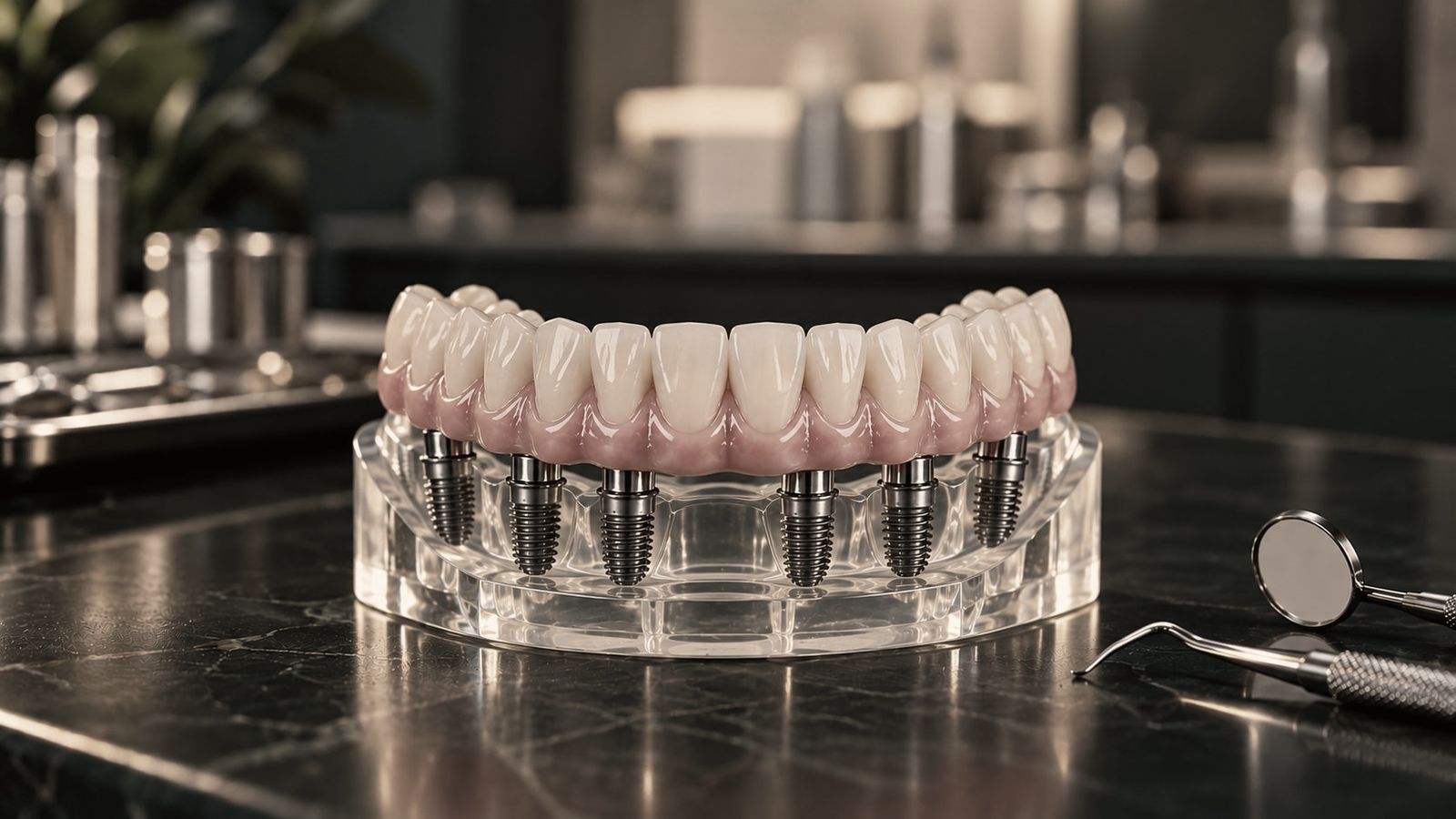
All-on-6
A fixed full-arch bridge supported by six implants spread along the jaw — one of the treatment options for a toothless jaw or teeth that can no longer be saved.
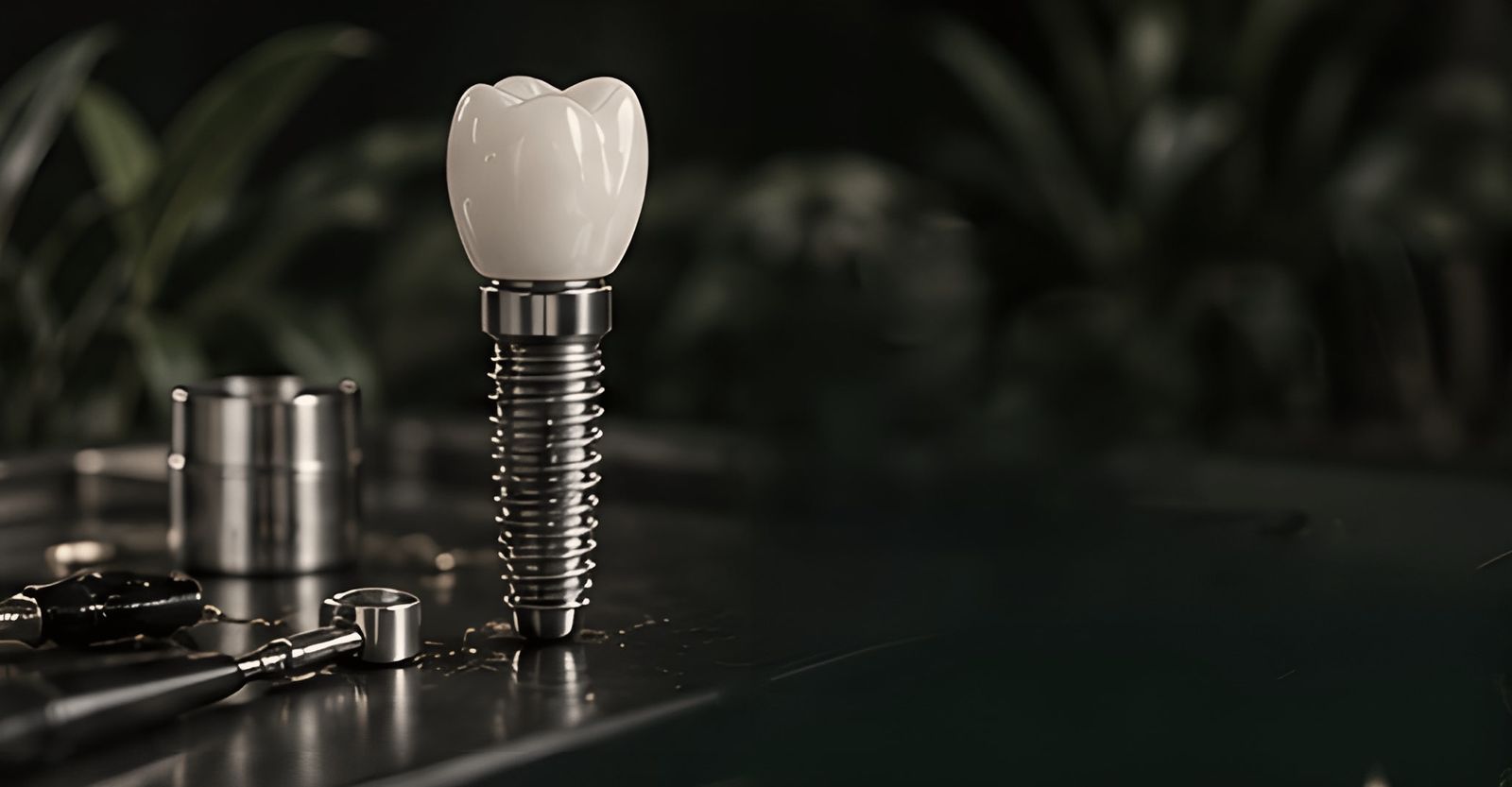
Dental implants
A long-lasting replacement for a missing tooth, anchored in your own bone — carefully planned and made to look and function as close to a natural tooth as possible.