

Dental Medicine
Prosthodontics
Crowns, bridges and dentures that restore the function and look of your teeth — made to fit your bite and planned individually.
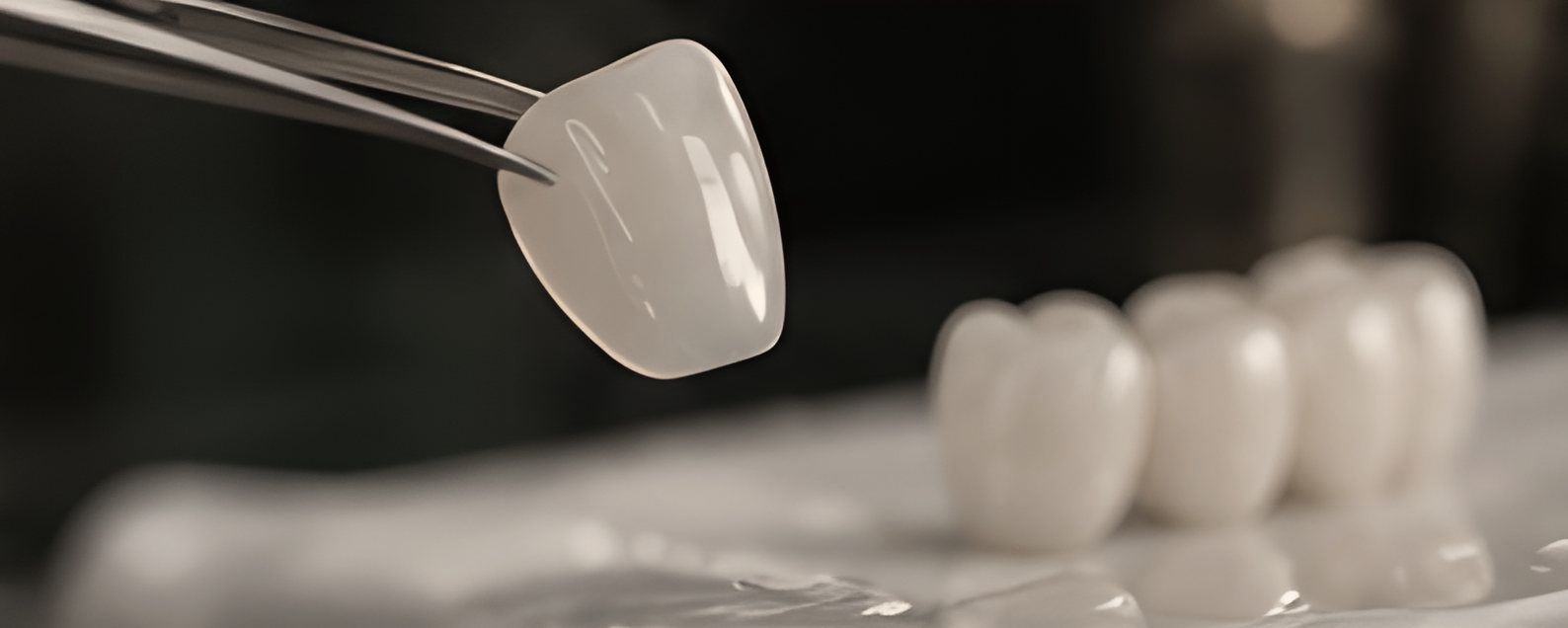
- CrownsThe type of crown is chosen individually, after an examination
- VeneersIPS e.max or refractory technique
- RestorationsFixed and removable
What is prosthodontics?
Prosthodontics is the branch of dentistry that restores damaged or missing teeth. A crown covers a tooth too damaged for a filling, a bridge spans the gap between teeth, and a denture replaces several teeth or a full arch. Crowns, bridges and dentures can also be made on implants.
Good prosthetic work is not just attractive. It should fit precisely, allow good oral hygiene and be functionally balanced with the bite, to reduce the risk of complications.
We choose the type of restoration individually, after an examination and an assessment of your teeth, bite, and functional and aesthetic needs. We explain the options and the treatment plan before treatment begins.
When to see us
When to see us
A prosthetic solution is most often needed when:
- a tooth is too damaged or broken for a normal filling
- a root-treated tooth needs protection from fracture
- one or more teeth are missing
- an old crown or bridge leaks, is damaged or does not match in colour
- a denture does not hold, rubs or is damaged
- you would like a fixed solution instead of a removable denture
Treatments
Implant restorations and veneers
The procedure and aftercare for implant-supported restorations and porcelain veneers.
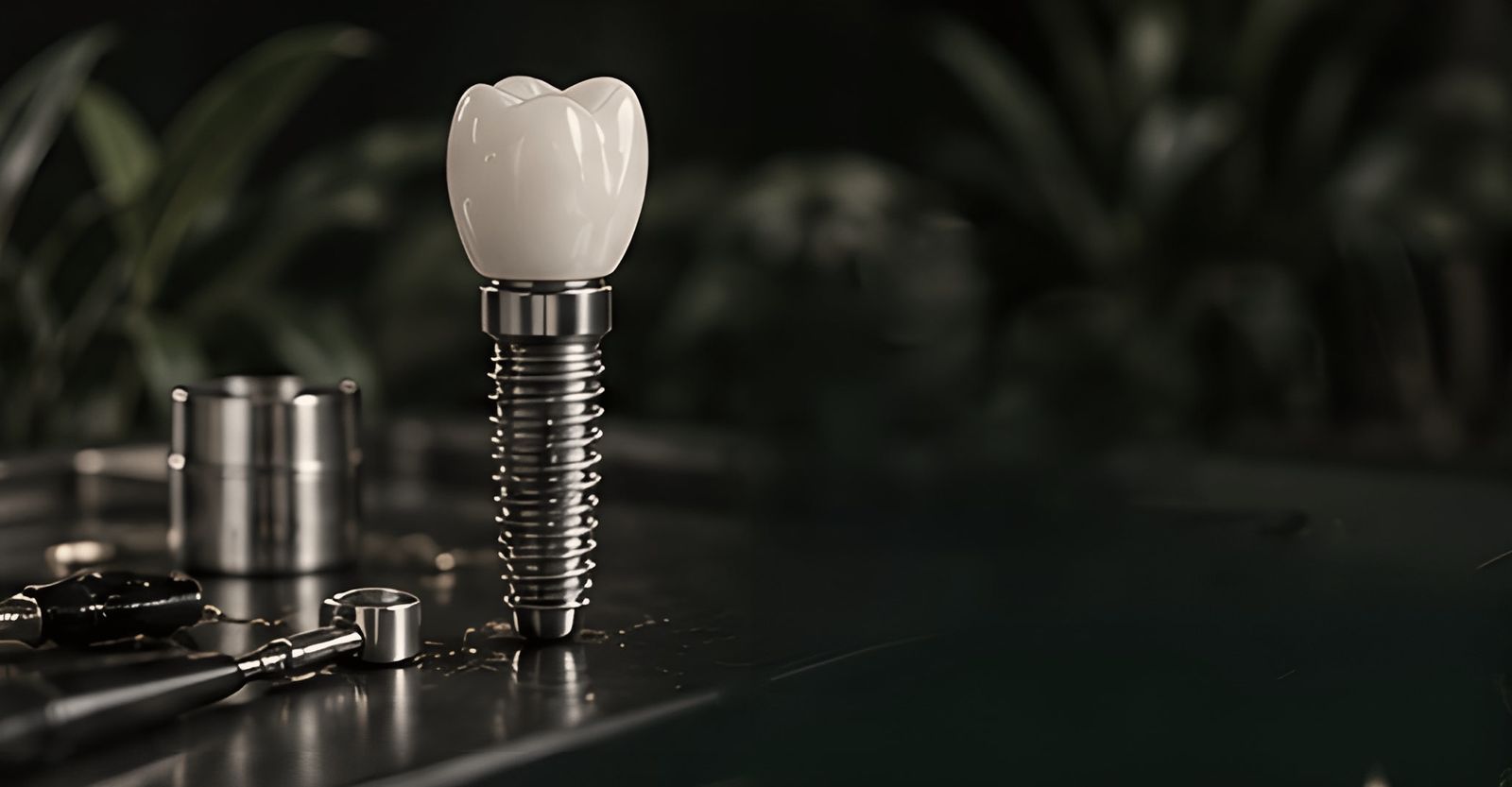
Dental implants
A long-lasting replacement for a missing tooth, anchored in your own bone — carefully planned and made to look and function as close to a natural tooth as possible.
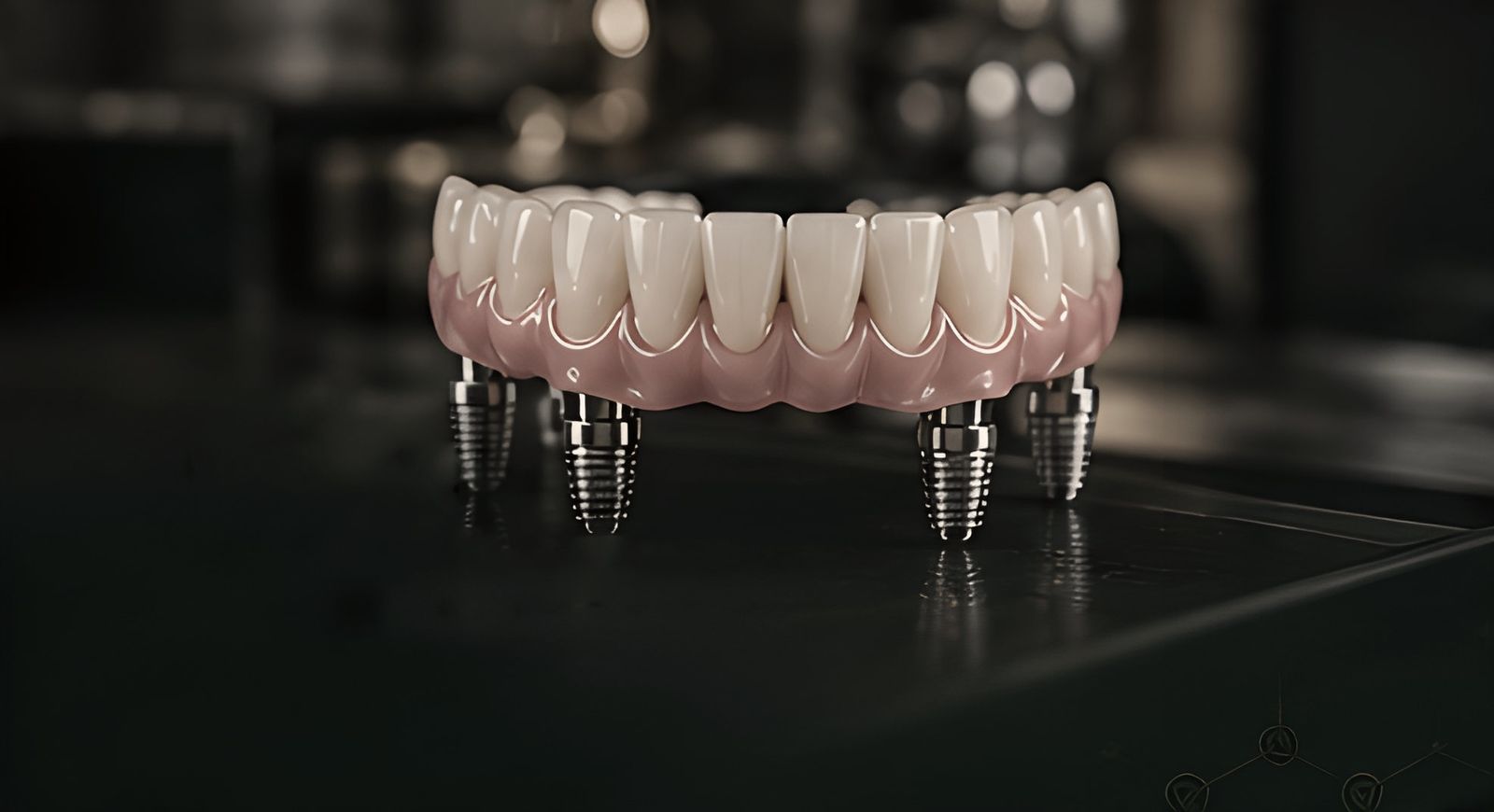
All-on-4
Fixed teeth for a full arch supported by four implants — for patients with no teeth, or with teeth that can no longer be saved.
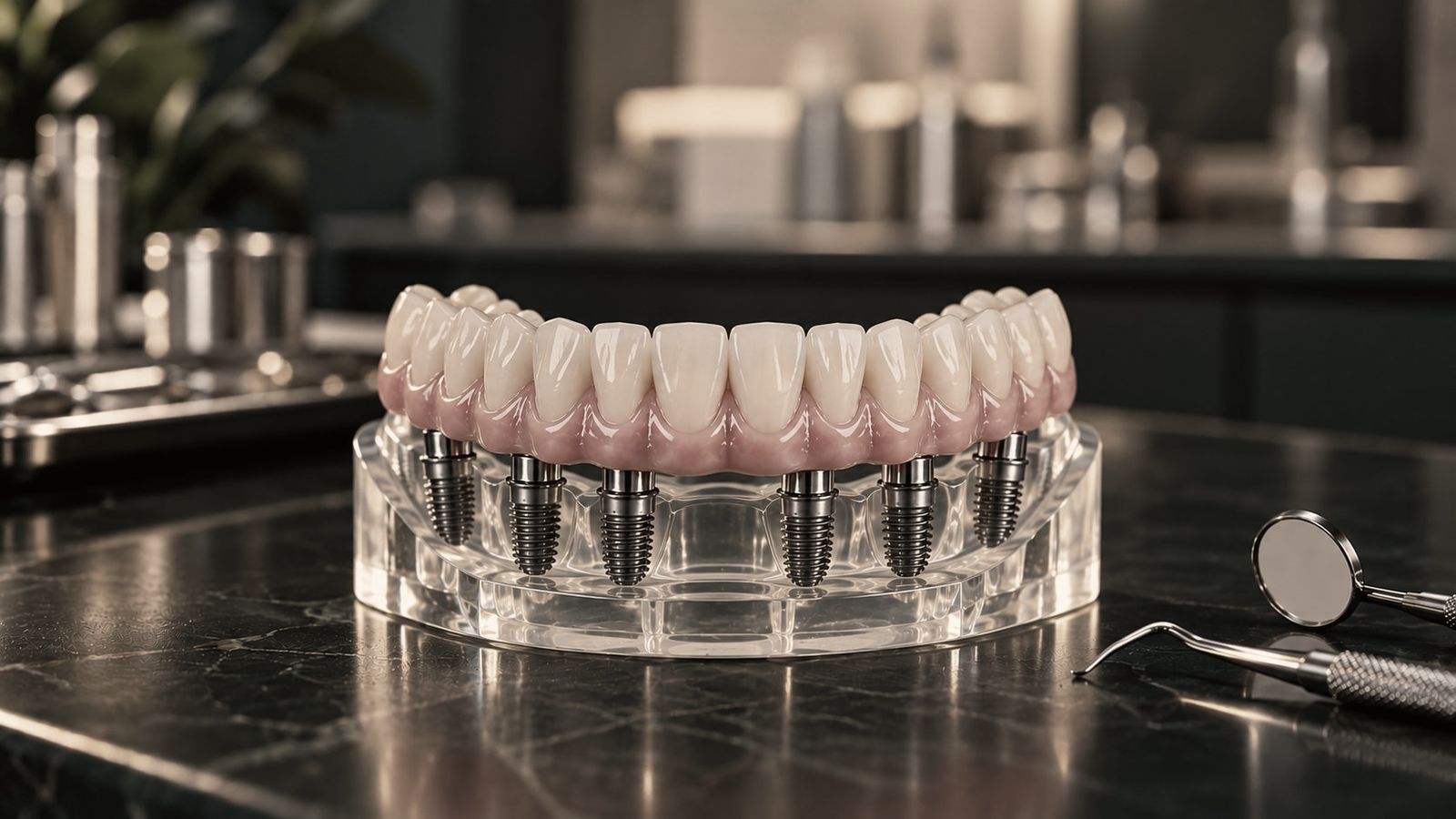
All-on-6
A fixed full-arch bridge supported by six implants spread along the jaw — one of the treatment options for a toothless jaw or teeth that can no longer be saved.
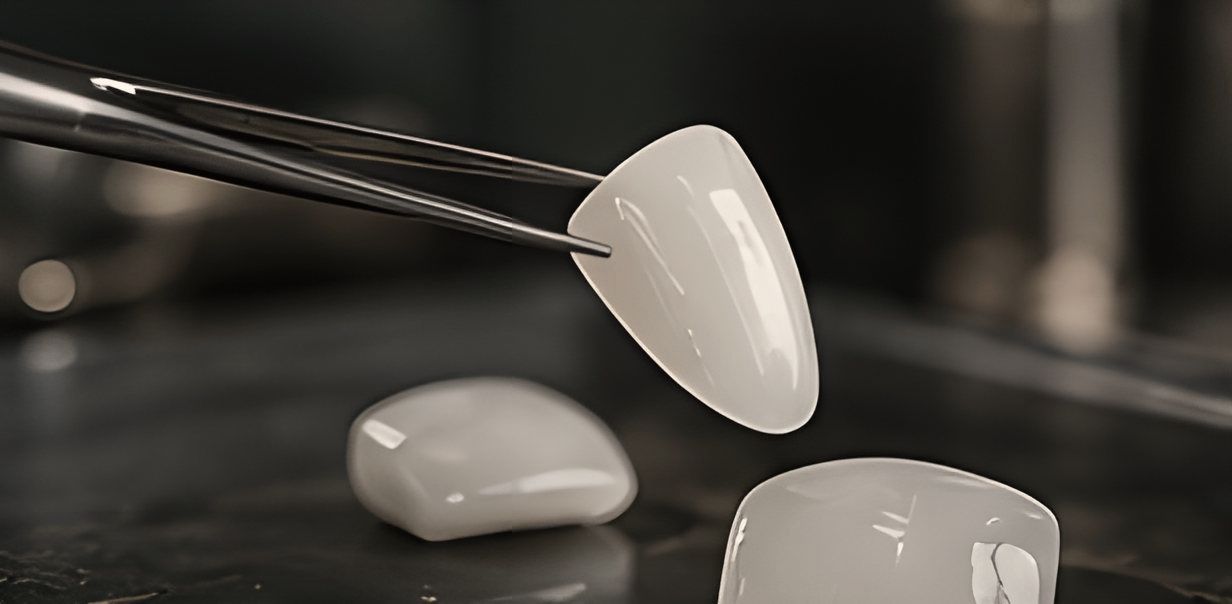
Porcelain veneers
Thin ceramic veneers that change the shape, colour and proportions of your front teeth — made to measure for your smile, preserving as much of your own tooth as possible.
Services
The prosthetic work we provide
An overview of prosthetic work, with what each is for.
Crowns
- Zirconia-ceramic crown
- A zirconia base layered with ceramic.
- Monolithic zirconia crown
- Made from a single piece of zirconia, with no layered ceramic.
- IPS e.max crown
- A crown made of lithium disilicate glass-ceramic.
- Porcelain-fused-to-metal crown
- A metal base covered with ceramic.
- Titanium-zirconia crown
- A crown combining titanium and zirconia ceramic.
- Temporary laboratory crown
- Protects the prepared tooth and keeps its appearance while the final crown is made.
- Aesthetic composite post and core
- A post in the root of a root-treated tooth that supports the future crown, without metal.
Veneers
- IPS e.max veneer
- A thin lithium disilicate glass-ceramic veneer for the front surface of a tooth.
- Porcelain veneer — refractory technique
- A very thin porcelain veneer layered on a refractory model.
Removable prosthetics
- Complete acrylic denture
- A denture for a toothless jaw, made of acrylic.
- Partial acrylic denture
- Replaces several teeth when some natural teeth remain.
- Wironit denture
- A partial denture with a cast metal base.
- PRECI-LINE precision attachment
- A precision attachment connecting the denture to crowns on natural teeth, instead of visible clasps.
- Temporary denture
- An interim replacement, for example during healing.
- Denture repair / reline
- Repairing a damaged denture or adapting its fitting surface to changes in the gums.
Implant restorations
- Crown on an implant
- Replacing a single tooth on an implant.
- All-on-4
- A fixed full-arch bridge on four implants.
- All-on-6
- A fixed full-arch bridge on six implants.
- Removable denture on 2 or 4 implants
- A denture that clips onto implants and is taken out for cleaning.
Diagnostics and approach
From diagnosis to the final restoration
Before any prosthetic work we check the health of the tooth, root and surrounding bone — with an X-ray and, if needed, a CBCT scan. A tooth carrying a crown or bridge must be healthy: decay, inflammation at the root tip or gum disease are treated first.
We then agree on the solution together. The work is made in a dental laboratory from an impression, and fit, bite and shade are checked before it is fitted.
A healthy foundation
Decay, inflammation and gum disease are treated before prosthetic work.
An individual choice
The type of restoration is chosen according to your teeth, bite, and functional and aesthetic needs.
Checked before fitting
Fit, bite and shade are checked before final cementation.
Crown, bridge or denture?
Different prosthetic solutions suit different situations.
Steps
How is prosthetic work made?
Examination and diagnosis
Condition of the tooth, root and bone, with a CBCT scan if needed.
Treatment plan
Agreeing on the type of restoration after the examination and bite assessment.
Preparation
Preparing the tooth or, for dentures, taking impressions and recording the bite.
Interim solution
A temporary crown or denture while the final work is made.
Try-in
Checking fit, bite, shape and shade.
Fitting and review
Cementation or denture fitting, plus care instructions.
Benefits
What a considered prosthetic plan gives you
An individual plan
The solution is chosen for your needs, not from one template.
Protecting your own teeth
A crown protects a weakened tooth from fracture.
A balanced bite
The work is balanced with your bite to reduce strain on the teeth.
Natural appearance
Shape and colour matched to your teeth.
Fixed or removable
From a fixed crown you never take out to an implant-retained denture that is removed for cleaning.
Repairable
Dentures can be repaired and relined as the gums change.
Frequently asked questions
Frequently asked questions
Can’t find your answer? Call us or send an enquiry.
+385 99 268 6537Does a tooth need a crown after root canal treatment?
Often, yes — especially back teeth and teeth with significant tissue loss, because a treated tooth is more brittle. Sometimes a post and core is needed before the crown.
Is a bridge or an implant better?
A bridge on natural teeth requires preparing the neighbouring teeth; an implant preserves them but needs enough bone and a surgical procedure. Which makes more sense depends on the neighbouring teeth, the bone and your wishes.
What is the difference between an acrylic and a Wironit denture?
A partial acrylic denture is made of acrylic, while a Wironit denture has a cast metal base. Which suits you better is assessed after the examination.
What is a PRECI-LINE attachment?
It is a precision attachment that connects a partial denture to crowns on natural teeth. It replaces visible metal clasps, making the denture more discreet.
How long does a crown take?
Usually several appointments: preparation and impression, try-in and fitting. In the meantime a temporary crown protects the tooth. The exact number depends on the type of work.
Can my existing denture be repaired?
In many cases, yes. A cracked denture can be repaired, and one that no longer fits well can be relined — adapted to changes in the gums and bone.
Related
Related areas
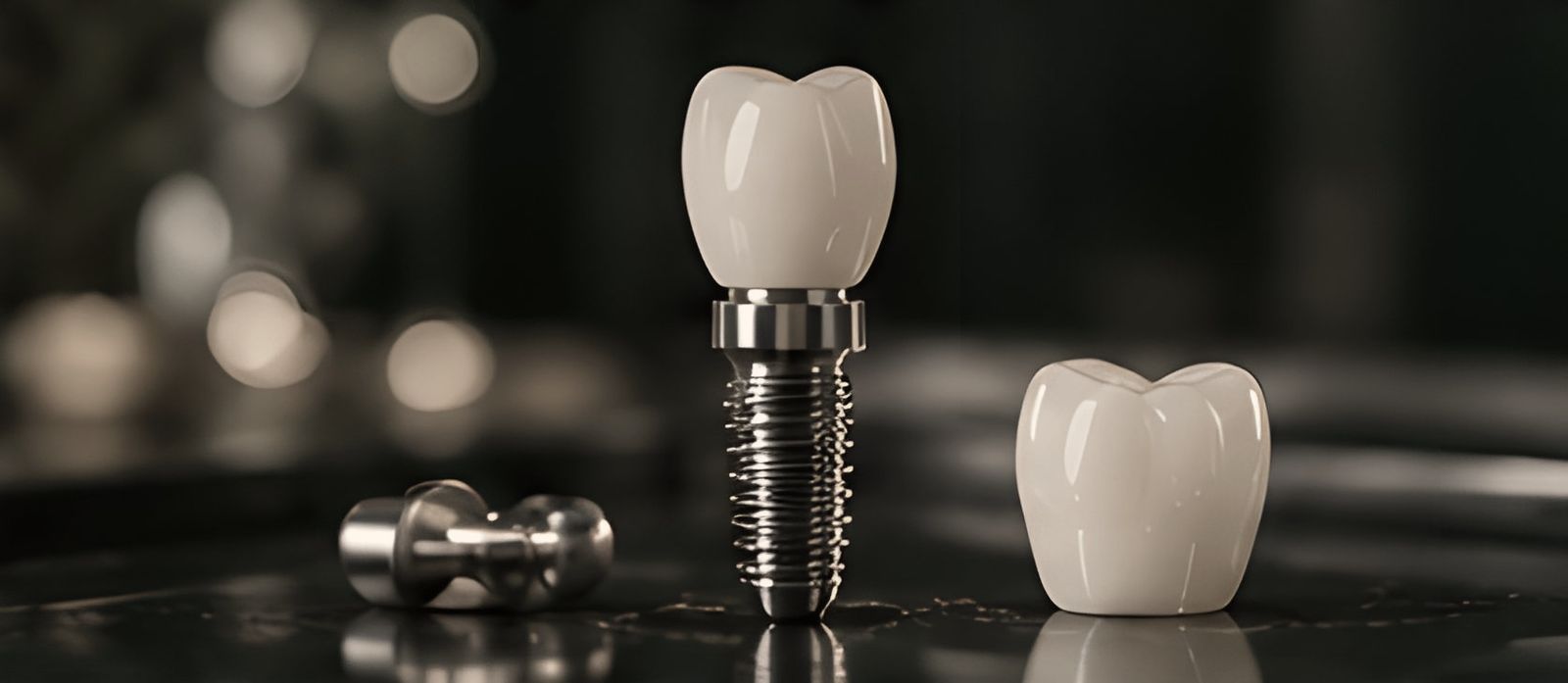
Implantology
Replacing missing teeth with support from your own bone — from a single tooth to a full arch, planned on a three-dimensional scan.
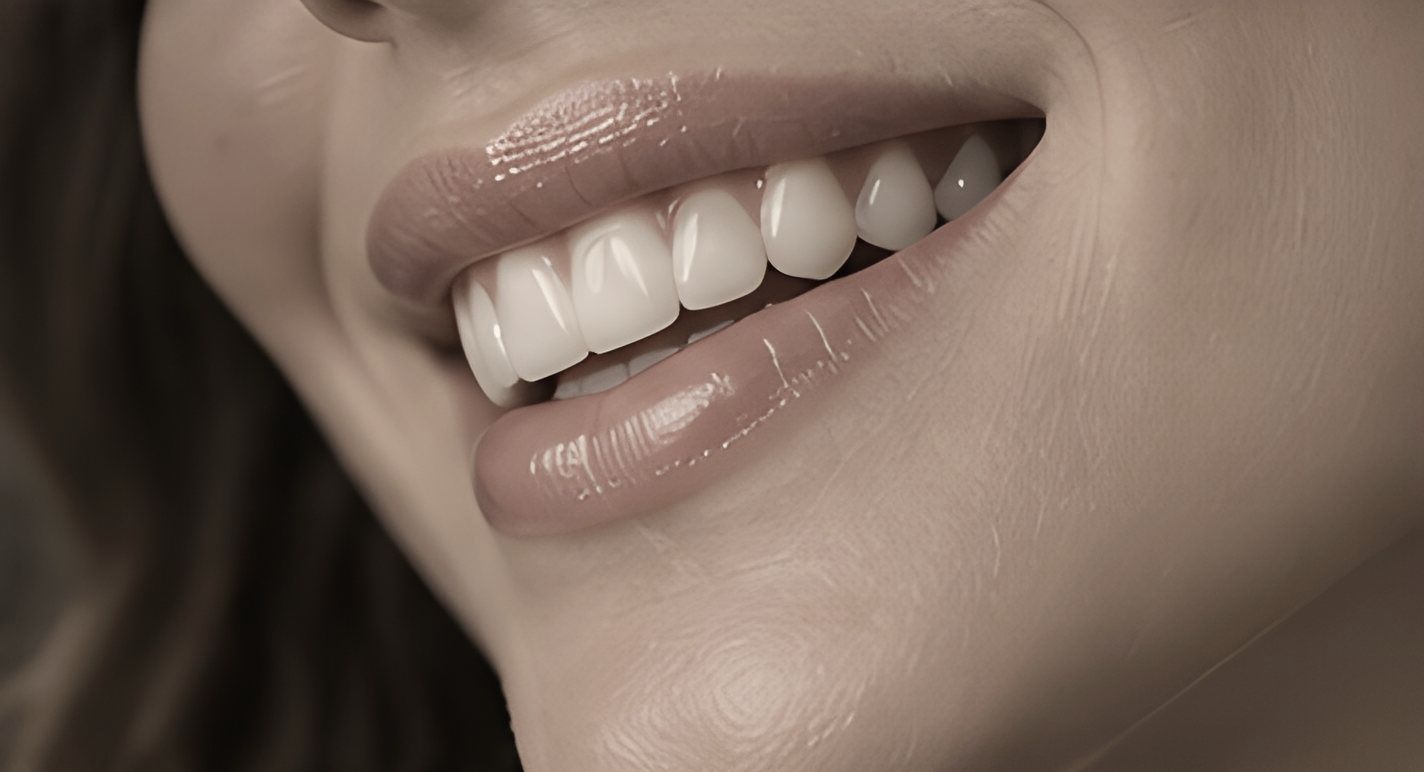
Cosmetic dentistry
A balanced, naturally beautiful smile — shaped to suit your face, with as little intervention on healthy teeth as possible.
General dentistry
Regular check-ups, prevention and timely treatment — the foundation of healthy teeth, and the best way to reduce the need for more complex treatment.