

Dental Medicine
Periodontology
Healthy gums are an important foundation for keeping your teeth. Bleeding, receding gums and other changes are a reason for an examination and an assessment of periodontal health.
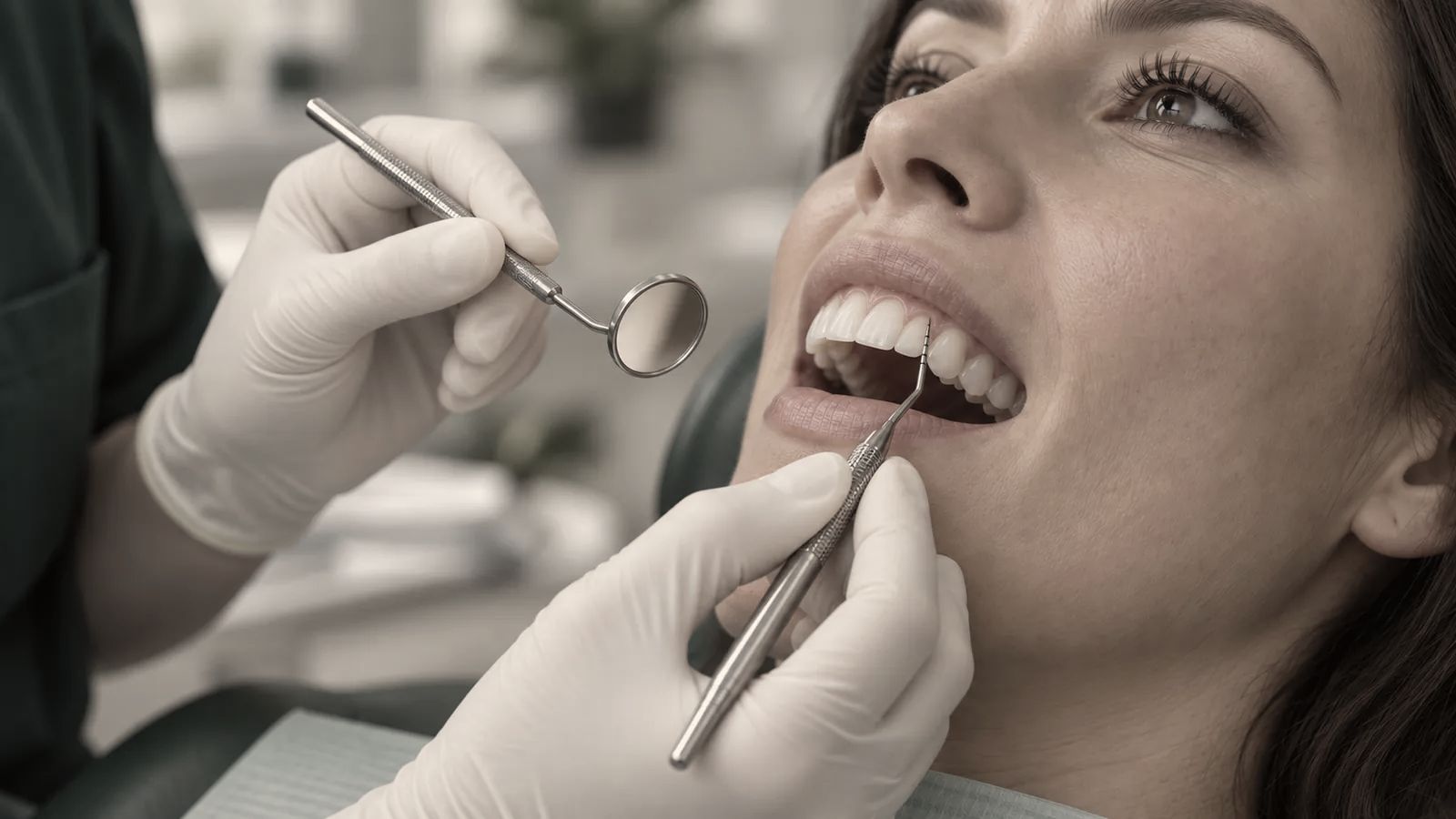
What is periodontology?
Periodontology deals with the health of the tissues that support the teeth — the gums, the bone and the fibres that hold each tooth in the jaw.
Changes in these tissues often develop slowly and without pain. That is why it matters to recognise them early.
Gingivitis and periodontitis
The two most common conditions of the supporting tissues. Which one is present is established at an examination.
| — | Gingivitis | Periodontitis |
|---|---|---|
| What it affects | The gums | The gums and deeper supporting tissues, including bone |
| Common signs | Redness, swelling, bleeding when brushing | Also receding gums, bad breath, loose teeth |
| Course | With good hygiene and professional cleaning, the inflammation usually settles | Lost supporting tissue usually does not grow back; treatment and maintenance aim to slow progression |
When to see us
When to come for an examination?
It is a good idea to come for an examination if you notice:
- bleeding or swollen gums
- receding gums — teeth look longer
- bad breath that does not go away
- loose teeth or a change in your bite
These signs are not a diagnosis. They are a reason for an examination, where we assess what is going on.
Services
Treatment and long-term maintenance
The basis is removing plaque and tartar, together with good oral hygiene at home. When needed, treatment continues below the gum line, and surgery is considered only if pockets remain deep. The scope of treatment and how often maintenance is needed are decided after the examination.
Assessment
- Periodontal charting
- Measuring the depth of periodontal pockets and recording the condition of the gums and supporting tissues around each tooth.
Professional cleaning
- Scaling and polishing
- Tartar holds bacteria along the gum line; removing it is the basis for calming inflammation.
- Air polishing
- Removes surface deposits and stains, together with scaling or on its own.
- Scaling, air polishing and polishing
- All in one visit, when a complete clean is needed.
Periodontal therapy
- Deep cleaning and root planing
- Removing plaque and tartar below the gum line, from the root surfaces inside periodontal pockets.
- Antibiotic therapy
- As an addition to mechanical cleaning, only when the assessment shows it is needed.
- Laser therapy
- As a complement to the treatment of periodontal pockets, as assessed by the dentist.
Surgical and regenerative procedures
- Periodontal surgery
- Surgical access to deeper pockets that cannot be managed by cleaning alone.
- Regenerative procedures
- In selected cases, procedures that aim to partly restore lost supporting tissue. The outcome depends on the shape of the defect and cannot be guaranteed.
Assessment
What does the assessment involve?
At the examination we look at the gums, plaque and tartar, and how stable the teeth are, and measure pocket depth with a periodontal probe. We also ask about your general health, medication and smoking, as they affect the supporting tissues.
When needed, an X-ray (panoramic OPG or RVG) shows the condition of the bone around the teeth.
After the assessment we explain what we found and suggest a plan for treatment and maintenance.
Hygiene and check-ups
At home, what matters most is regular, thorough brushing and cleaning between the teeth. We will show you which aids suit you at your examination.
Regular check-ups allow changes to be noticed early. How often you come is decided individually, according to the condition of your gums and how quickly tartar builds up.
Frequently asked questions
Frequently asked questions
Can’t find your answer? Call us or send an enquiry.
+385 99 268 6537Is it normal for gums to bleed when brushing?
Bleeding is not usual and is often a sign of gum inflammation. It is a reason for an examination, especially if it keeps happening.
Can periodontitis be cured?
Periodontitis is a long-term condition. The aim of treatment and regular maintenance is to slow or stop its progression; the outcome depends on the stage, home hygiene and general health.
Can loose teeth be saved?
It depends on the cause and on how much supporting tissue has been lost. This can only be assessed after an examination and an X-ray.
Will I need surgery?
Usually not. Treatment begins with cleaning and procedures below the gum line; surgical or regenerative procedures are considered if pockets remain deep afterwards.
How often do I need maintenance visits?
This is decided individually. For some people regular check-ups are enough; others need more frequent visits.
Does smoking affect gum health?
Yes. Smoking is a known risk factor for diseases of the supporting tissues and can mask gum bleeding, so changes are noticed later.
Related
Related areas
General dentistry
Regular check-ups, prevention and timely treatment — the foundation of healthy teeth, and the best way to reduce the need for more complex treatment.

Oral Surgery
Carefully planned procedures, a clearly explained process and an individual approach — from tooth extraction to more complex surgical procedures.

Implantology
Replacing missing teeth with support from your own bone — from a single tooth to a full arch, planned on a three-dimensional scan.