

Dental Medicine
Implant dentistry
Replacing missing teeth with support from your own bone — from a single tooth to a full arch, planned on a three-dimensional scan.
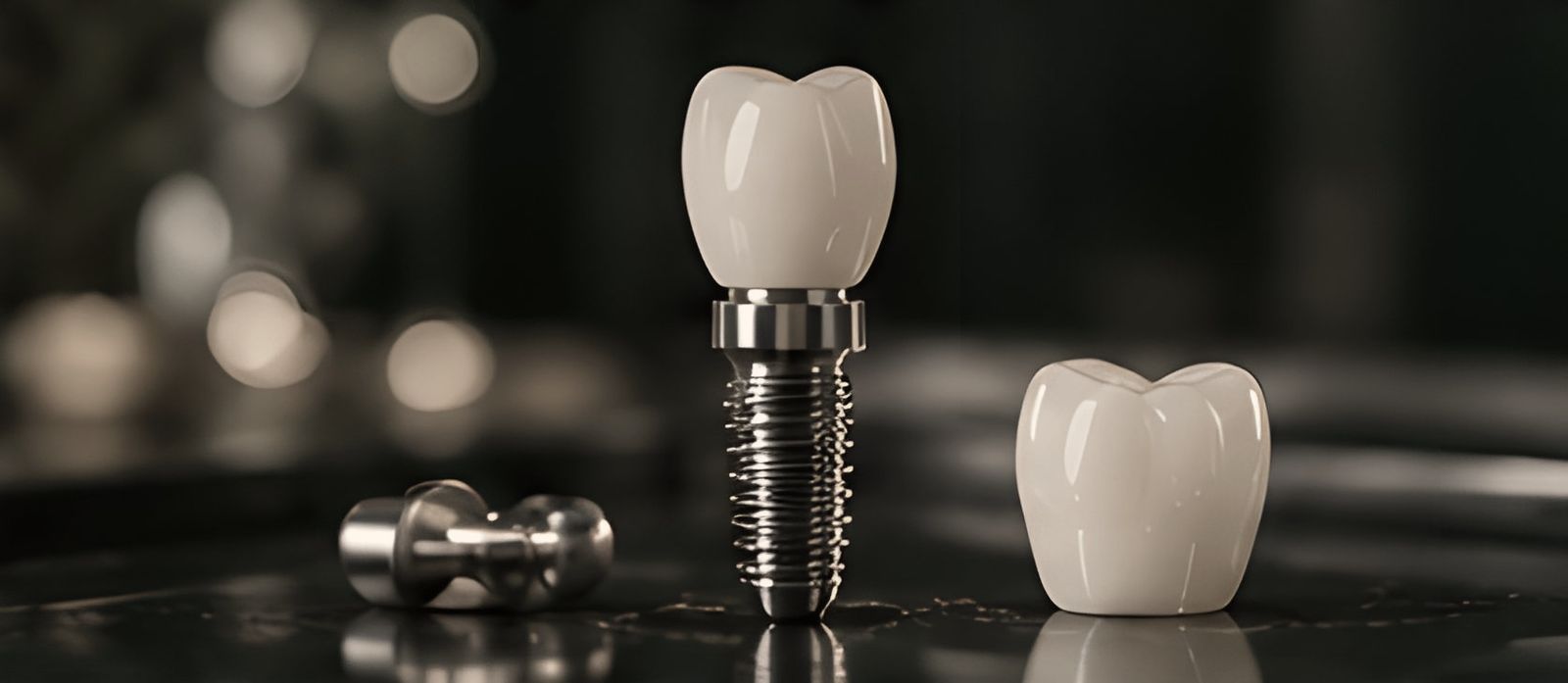
- NeodentImplant system
- 3D CBCTFor planning when indicated
- Sinus liftClosed and open, when bone is lacking
What is implant dentistry?
Implant dentistry replaces missing teeth with implants — small screws placed in the jawbone in place of a missing tooth. Once the bone has bonded with the implant (a process called osseointegration), an abutment and the final restoration are attached: a crown, bridge or denture.
Modern implant dentistry does not begin with surgery but with diagnosis. Where clinically indicated, CBCT allows assessment of the amount and anatomy of the bone and of the planned implant’s relationship to the mandibular canal, the maxillary sinus and other important anatomical structures. This way the implant position is decided before the procedure — with the bone in mind, and the future tooth that will sit on it.
Implant dentistry is closely linked with oral surgery: when a tooth cannot be saved, it sometimes has to be removed before an implant is placed.
When to see us
When to consider an implant
Patients most often come to us for an implant consultation when they:
- have lost a single tooth and would rather not have healthy neighbouring teeth prepared for a bridge
- are missing several teeth in a row, or their back teeth
- have no teeth in one or both jaws
- wear a denture that moves, rubs or makes chewing difficult
- have a tooth that cannot be saved because of a fracture, decay or infection
Treatments
Implant solutions
The procedure, recovery and aftercare for each of these solutions.
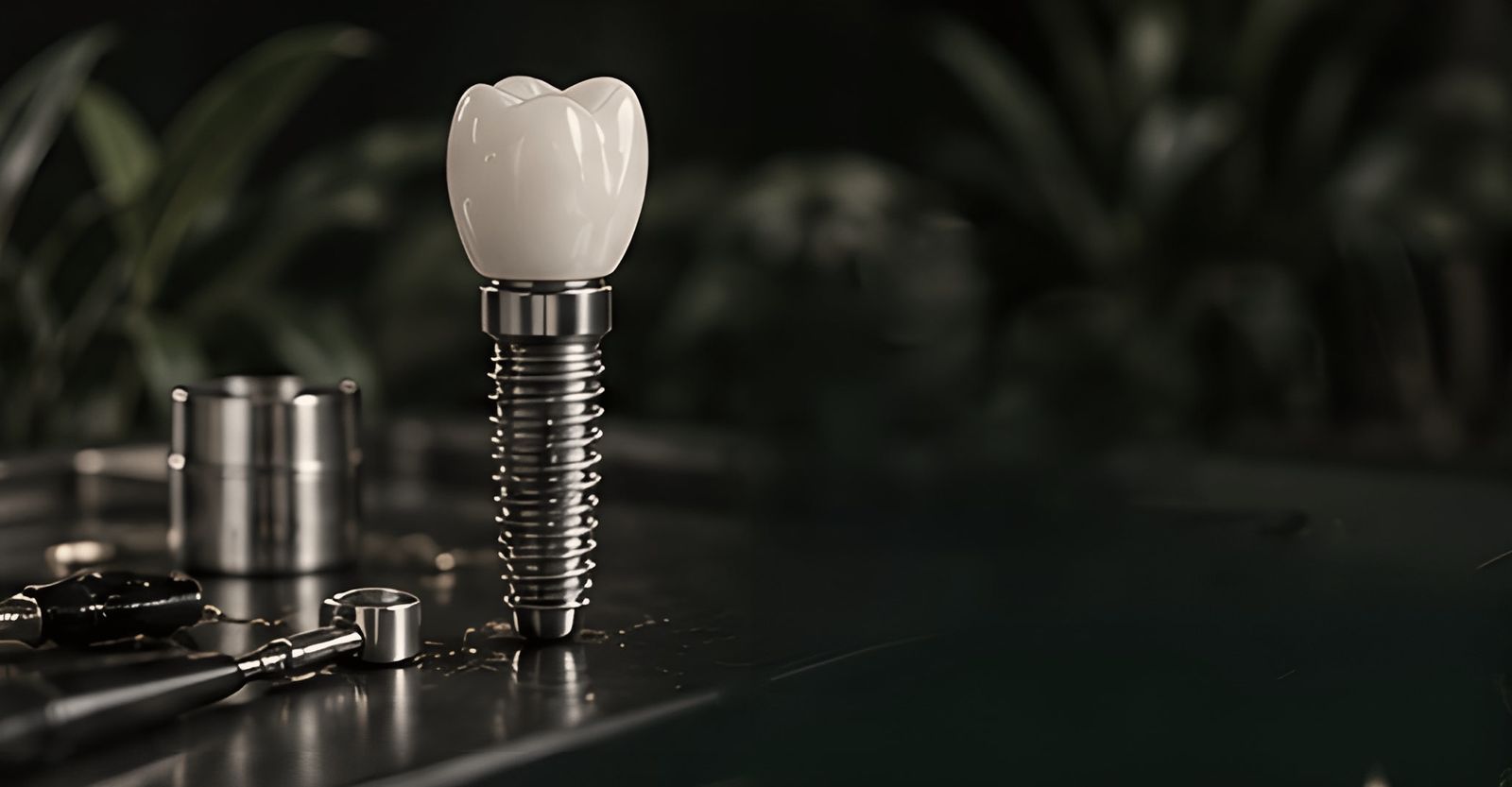
Dental implants
A long-lasting replacement for a missing tooth, anchored in your own bone — carefully planned and made to look and function as close to a natural tooth as possible.
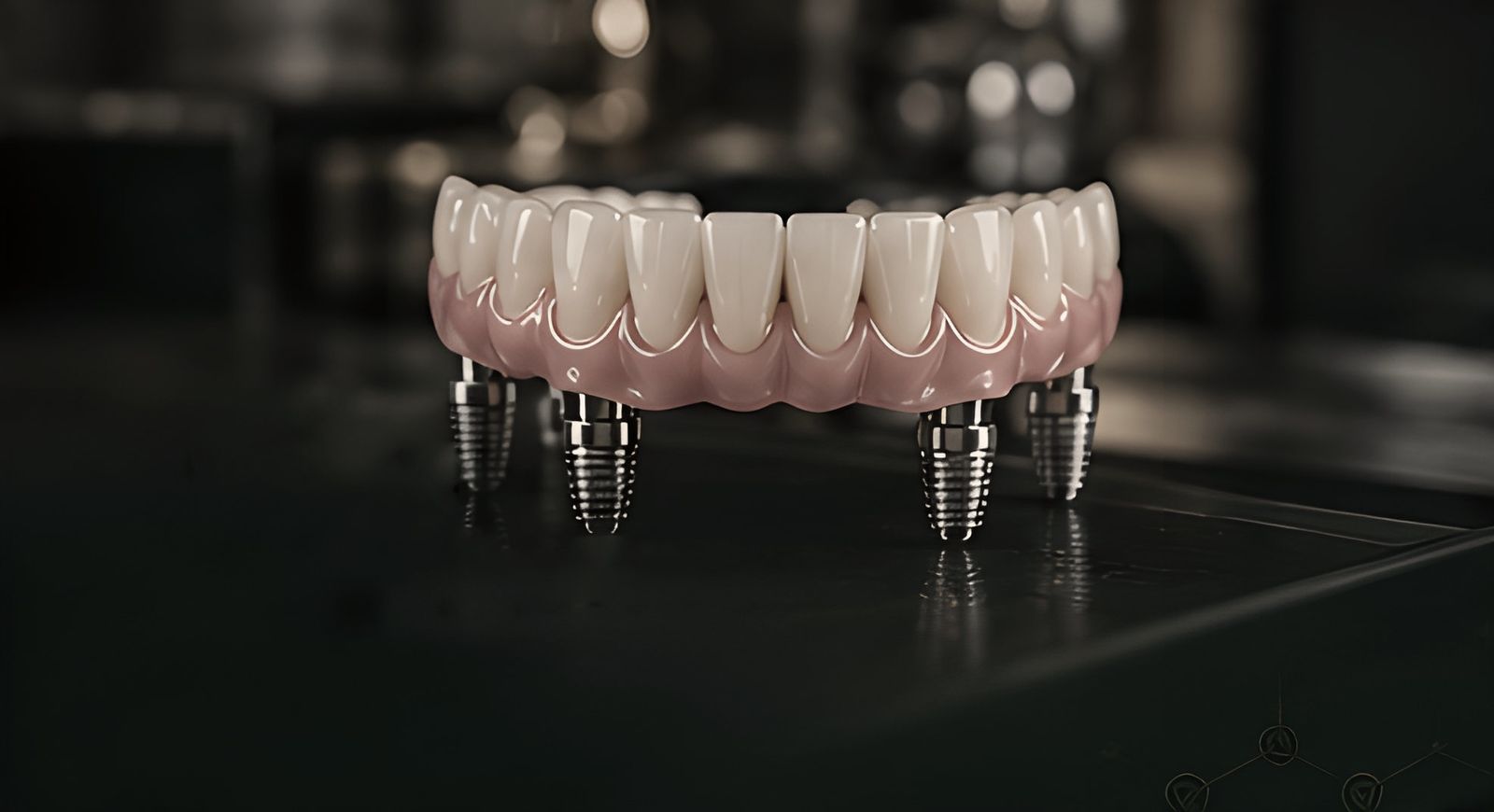
All-on-4
Fixed teeth for a full arch supported by four implants — for patients with no teeth, or with teeth that can no longer be saved.
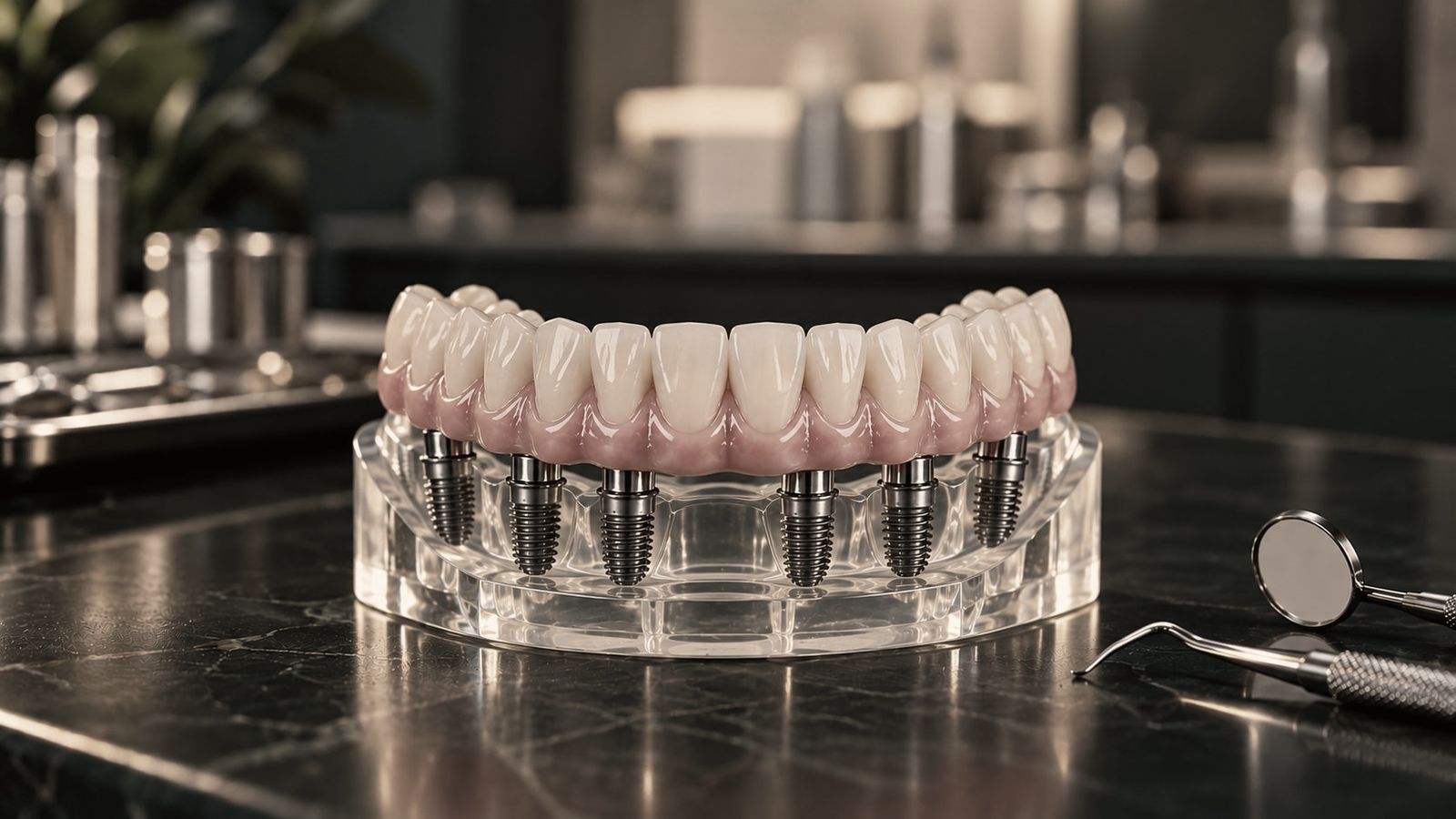
All-on-6
A fixed full-arch bridge supported by six implants spread along the jaw — one of the treatment options for a toothless jaw or teeth that can no longer be saved.
Services
All implant services
An overview of implant services. Which of them you need is decided after the examination and any diagnostics required.
Implants and abutments
- Neodent implant placement
- Implant placement under local anaesthesia, in the position planned on the 3D scan.
- Abutment
- The connecting piece between the implant in the bone and the crown in the mouth.
- Temporary crown on an implant
- An interim tooth on the implant until the final crown is made, when conditions allow.
When bone is lacking
- Closed (crestal) sinus lift
- Raising the sinus floor through the implant site when a little bone height is missing at the back of the upper jaw.
- Open sinus lift with bone graft
- For a larger deficit: the sinus floor is lifted and the space is filled with bone substitute material. Healing takes longer.
Full arch
- All-on-4
- A fixed bridge on four Neodent implants; a temporary fixed bridge is included in the initial package.
- All-on-6
- A fixed bridge on six Neodent implants spread along the jaw.
- Final restoration for All-on-4 / All-on-6
- After healing: a composite / acrylic or zirconia-ceramic bridge.
- Removable denture on 2 or 4 implants
- A denture that clips onto implants — much more stable than a conventional one, and taken out for cleaning.
Diagnostics and approach
Planned before the procedure, not during it
Implant treatment starts with a clinical examination and, where indicated, a 3D CBCT scan, which can be taken on the same visit. The 3D scan allows assessment of the bone and its relationship to the mandibular canal and maxillary sinus, and shows whether an additional procedure is needed. Based on this, you receive a plan: number and position of implants, type of restoration, timeline and costs.
The implant is only the foundation — what you see and chew with is the restoration. That is why the implant is planned around the future tooth, not the other way round. Placement is done under local anaesthesia, and the final crown, bridge or denture follows after healing.
Diagnosis in one place
Clinical examination, a CBCT scan where indicated and a discussion of your options — possible in the same appointment.
A written treatment plan
You know the steps, timeline and costs in advance, including any additional procedures.
Implants and restoration together
Implant position is planned around the final tooth, your bite and aesthetics.
Which implant solution for which situation?
A general overview — the final decision depends on bone quantity and quality, your bite, general health and your wishes.
| — | Single implant | All-on-4 / All-on-6 | Implant-retained denture |
|---|---|---|---|
| Typical situation | One or a few teeth missing | No teeth, or none that can be saved, in a full arch | Toothless jaw, conventional denture does not hold |
| Number of implants | One per tooth, or bridge supports | 4 or 6 per arch | 2 or 4 per arch |
| Fixed or removable | Fixed | Fixed | Removable — taken out for cleaning |
| Interim solution | Temporary crown if needed | Temporary fixed bridge in the package, when clinical conditions allow | According to the treatment plan |
Which solution suits you is decided by the dentist after a clinical examination and analysis of the diagnostic images.
Steps
What does implant treatment involve?
The exact order and timeline depend on your case; this is the usual course.
Examination and CBCT
Clinical examination, medical history and, where indicated, a 3D scan — possible on the same visit.
Treatment plan
Number and position of implants, additional procedures, type of restoration, timeline and costs.
Preparation
Extractions or a sinus lift if needed, so the implant has enough bone.
Implant placement
Under local anaesthesia, in the position planned in advance.
Healing
The bone bonds with the implant, usually over several months. An interim solution can be worn if needed.
Restoration and check-ups
Abutment, final crown, bridge or denture, and regular check-ups.
Benefits
Why modern implant dentistry
Neighbouring teeth preserved
A single implant does not require preparing healthy teeth as a conventional bridge does.
Stability
Fixed work does not move when eating or speaking; an implant-retained denture holds much better.
Bone preservation
An implant loads the bone like a root and helps slow bone loss.
A plan before the procedure
Where indicated, a CBCT scan allows the procedure to be planned before it begins.
Solutions for many situations
From a single tooth to a full arch, fixed or removable.
Long-term
With good hygiene and check-ups, implants can last for many years.
Frequently asked questions
Frequently asked questions
Can’t find your answer? Call us or send an enquiry.
+385 99 268 6537Which implant system do you use?
We place Neodent implants. The implant is made of titanium, and an abutment is attached to it. We recommend keeping the details of your implant with your records.
Does implant placement hurt?
The procedure is done under local anaesthesia, so you should feel pressure rather than pain. Some discomfort and swelling for a few days afterwards is possible and is usually well controlled with painkillers.
Can I have an implant if I do not have enough bone?
Often, yes. At the back of the upper jaw, missing bone can be addressed with a closed or open sinus lift. For a toothless jaw, All-on-4 may be an option, as its implants are positioned to avoid areas with less bone. What is possible in your case is assessed after an examination and diagnostic imaging.
How long does implant treatment take?
From placement to the final restoration usually takes several months, because the bone needs to bond with the implant. With a sinus lift it takes longer. Your exact timeline is part of your treatment plan.
What is the difference between All-on-4 and All-on-6?
Both replace a full arch with a fixed bridge. All-on-4 uses four implants and is often possible with less bone at the back of the jaw; All-on-6 uses six implants and more support points but needs more bone. A detailed comparison is on the All-on-4 and All-on-6 pages.
Is a fixed bridge or an implant-retained denture better?
A fixed bridge (All-on-4 / All-on-6) is not removed at home and does not cover the palate. A denture on 2 or 4 implants is taken out for cleaning and is much more stable than a conventional denture. The choice depends on bone, bite, preferences and ability to maintain it.
How long does an implant last?
With good oral hygiene, regular check-ups and a healthy lifestyle, implants can last for many years. Their lifespan cannot be guaranteed because it depends on maintenance, general health, smoking and chewing forces.
Related
Related areas
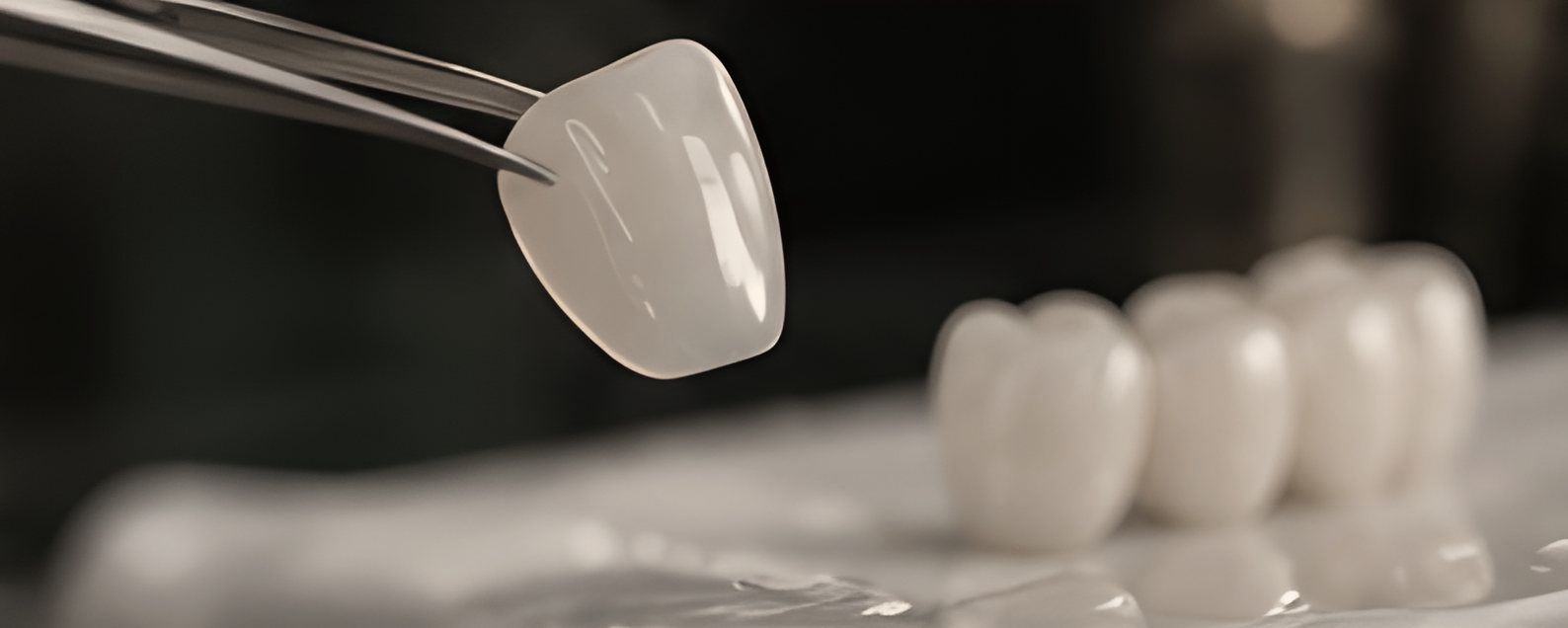
Prosthodontics
Crowns, bridges and dentures that restore the function and look of your teeth — made to fit your bite and planned individually.
General dentistry
Regular check-ups, prevention and timely treatment — the foundation of healthy teeth, and the best way to reduce the need for more complex treatment.
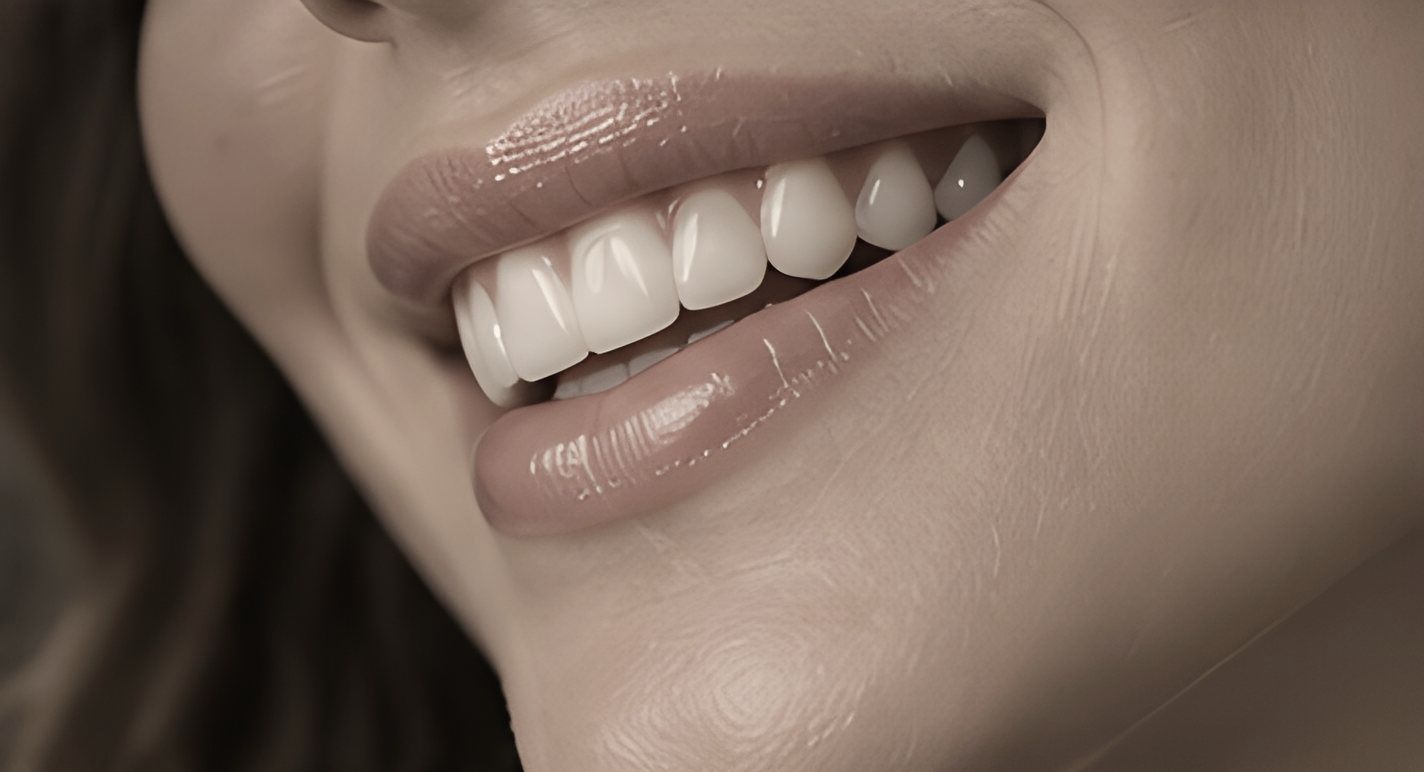
Cosmetic dentistry
A balanced, naturally beautiful smile — shaped to suit your face, with as little intervention on healthy teeth as possible.